What is out-of-home advertising (OOH)?
Out-of-home advertising is advertising made for the world outside the home. The term covers the media (billboards, transit, street furniture, place-based and digital screens), but it also names a creative discipline with rules of its own: work designed to be understood in a glance, at a distance, by someone who is walking, driving or waiting and has no intention of reading an ad. Where a film can build over thirty seconds, an OOH ad has the time it takes to pass it.
Some of the most memorable advertising ever made has been OOH, precisely because the constraints are so tight. One image, a few words and a brand, placed where it means something.
Why it matters
Why OOH advertising matters
It is the most public form of advertising. Everyone in a city sees the same board, which gives OOH a scale and a sense of confidence that targeted media cannot match: a brand on the street is a brand that is clearly here. It is also unskippable and usually seen close to where people shop, which makes it a powerful reminder at the moment of decision.
Great OOH does more than its media buy. It gets photographed, posted and written about, and in an age of feeds, a single striking site can reach far more people on phones than it does on the street.
In practice
How OOH advertising works in practice
- 01
The creative starts from the viewing conditions. Designers ask how far away the viewer will be, how fast they are moving, how long they will look and what surrounds the site, then build to those limits: one dominant image, a message of a handful of words, high contrast, a brand that is unmissable, type large enough to read from across a road. Each format gets its own layout, because a horizontal bulletin and a vertical station panel are different problems.
- 02
For digital screens, the work is built as motion: short loops, often silent, designed so any frame makes sense on its own, since nobody watches from the start. Files are delivered to each media owner's exact specification, proofed on site where possible, and photographed once live for reporting and for the brand's own channels.
At RIOT
OOH advertising at RIOT
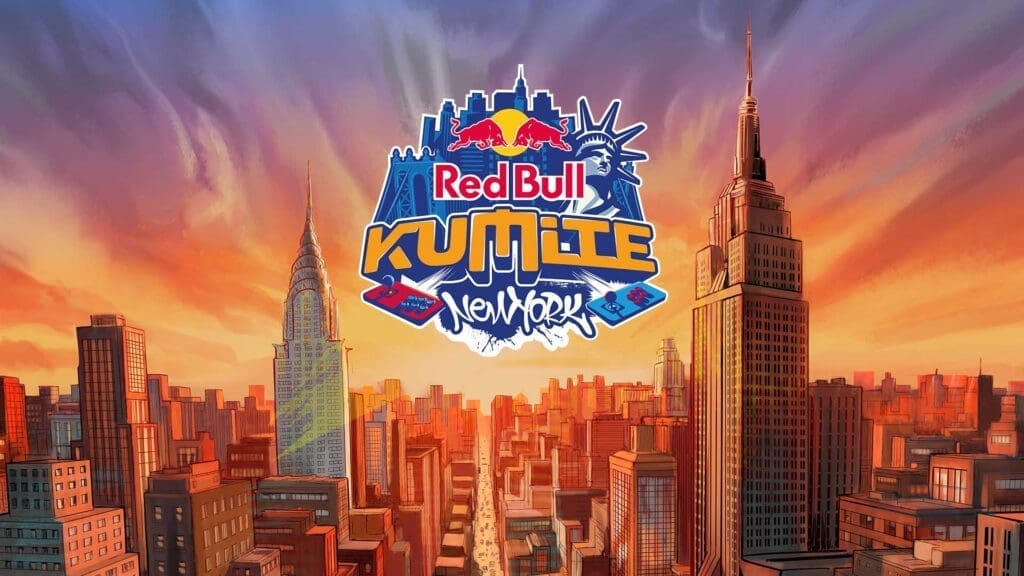
Our holiday window films for Tiffany & Co. are made for people on the street, who may stop for ten seconds or ten minutes, so each film has to hold from whatever moment they arrive. Our content for the Red Bull Kumite screens in Times Square asked the same question at a far larger scale.
Watch out
What people get wrong about OOH advertising
Putting too much on it. The most common OOH failure is a print ad blown up: a headline, a body line, a product shot, a logo, a URL and a legal line, all fighting for a second of attention. Every element added makes the others harder to read. The other mistake is ignoring the site. An ad designed without knowing where it will hang misses the chance to use its surroundings, and sometimes ends up saying something unintended next to whatever is across the street.