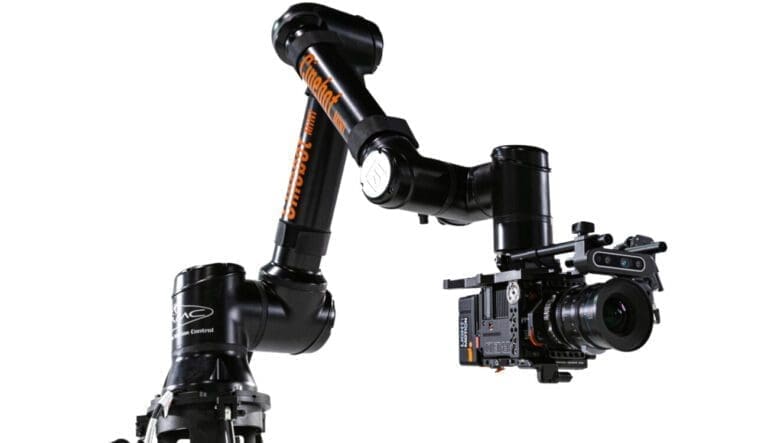
What is robotic filmmaking?
Robotic filmmaking is production in which machines perform the parts of a shot that humans used to. The camera is carried by a robotic arm, the lights change state from a stored cue, a turntable or a product handler moves the subject on a programmed path, and all of it runs from one timeline. The crew's job shifts from operating to designing: the shot is built in software, rehearsed with stand-ins and then executed, repeatably, by the rigs.
It grew out of visual effects and industrial automation, and it is now a recognizable style in product advertising, where the speed, precision and impossibility of robotic camera moves have become a visual signature. The term covers the whole approach rather than any single machine.
Why it matters
Why robotic filmmaking matters
It changes what a shot can be and what a shoot day looks like. Shots that were impossible, a camera threading through a product at speed, a splash captured on the same frame of the same move ten times, become routine. Shots that were slow, such as a dozen product variants with identical framing, become fast. And the day itself becomes calmer, because the hoping for a take is replaced by the running of one.
For brands, robotic filmmaking is the route to the kind of product imagery that once belonged only to the largest campaigns. The look of the high-end beauty commercial or the luxury watch film is largely a robotic look, and the equipment is available by the day.
In practice
How robotic filmmaking works in practice
- 01
Prep is most of it. The director, the cinematographer and the rig technician design the shots in previsualization, often against a 3D model of the set, and agree every move, cue and trigger. The rental house supplies the robots and the people who run them, and a prep day builds and tests the programs before the camera package arrives.
- 02
The shoot day is a sequence of rehearsals and passes. Each shot is run slowly for safety and framing, then at speed, with the crew resetting between runs. Robots on set are managed as industrial equipment, with marked envelopes, barriers and an emergency stop. The footage goes to post with the move data attached, so layers composite cleanly.
Watch out
What people get wrong about robotic filmmaking
Thinking the robots make the film. They execute a plan, and a plan without an idea produces a beautiful, empty move. The creative work happens before the rig arrives, in the choice of what the camera should do and why. The other mistake is scope. A full robotic setup is a serious production with its own crew and schedule, and a brand that expected a normal shoot day with a robot added will find the day is built around the robot instead.
A third is forgetting the human layer. The most memorable robotic shots end on something alive, a hand, a face, a reaction, and a film that is all machine movement with nothing to care about at the end of it is a demo reel for the rig rather than a film for the brand.