The RIOT Doctrine: 5 Things I Wish Someone Told Me When I Started
Build The Job That Doesn’t Exist: The RIOT Doctrine
RIOT didn’t start as a business plan. It started as a refusal.
Before the studios. Before the client work. Before the campaigns, the films, the worlds, the long nights where the only thing keeping you moving is a belief that what you’re building has to exist… there was a small gray room labeled “Career Counseling.”
It was 1995 and there was a man behind a desk. On the wall behind him, a poster of a mountain that said Reach for Your Dreams. I told him I wanted to combine art, music, and computers. I told him I wanted to design worlds. He didn’t even look up.

The moment the RIOT Doctrine started: told there was “no job for that” — so the job got built anyway.
He said, “There’s no job for that.”
That single sentence became the core of everything that followed.
If there was no job, I’d build it. If there was no path, I’d set one ablaze.
Rule #1) Make Your Own Job
The world will always try to hand you a script. Titles. Lanes. Permission structures. Boxes that look safe from the outside and feel like coffins once you’re inside them.
I wasn’t trying to pick a path. I was trying to prove that creativity doesn’t have borders.
Rule #1 is simple: build the job that doesn’t exist instead of trying to squeeze yourself into one that was never designed for you.
RIOT exists because I refused to accept a world where art, technology, music, film, design, architecture, and culture were separate languages. They’re the same signal — just transmitted at different frequencies.
If you feel like you don’t fit the available roles, that’s not a flaw. That’s a warning light: you’re supposed to invent a new one.

When every door is labeled and none of them fit, build your own.
Rule #2) Refuse Control — Even When It Costs You
When I was 15, my band Bluefur turned down a record deal. Not because we didn’t want it — because the label wanted to own the art. They wanted us to make ten versions of the same song. A loop of obedience.

“We chose freedom. Authenticity is non-negotiable.”
This is one of the hardest lessons in any creative career: the price of control is often disguised as opportunity. If someone else dictates your truth, you stop being an artist and start being an echo.
At RIOT, this principle is foundational. It’s why we protect the integrity of the idea. Why we fight for the emotional core. Why we don’t chase “content” when the work demands a story. Why we treat creativity like something sacred — not something to be diluted into a deliverable checklist.
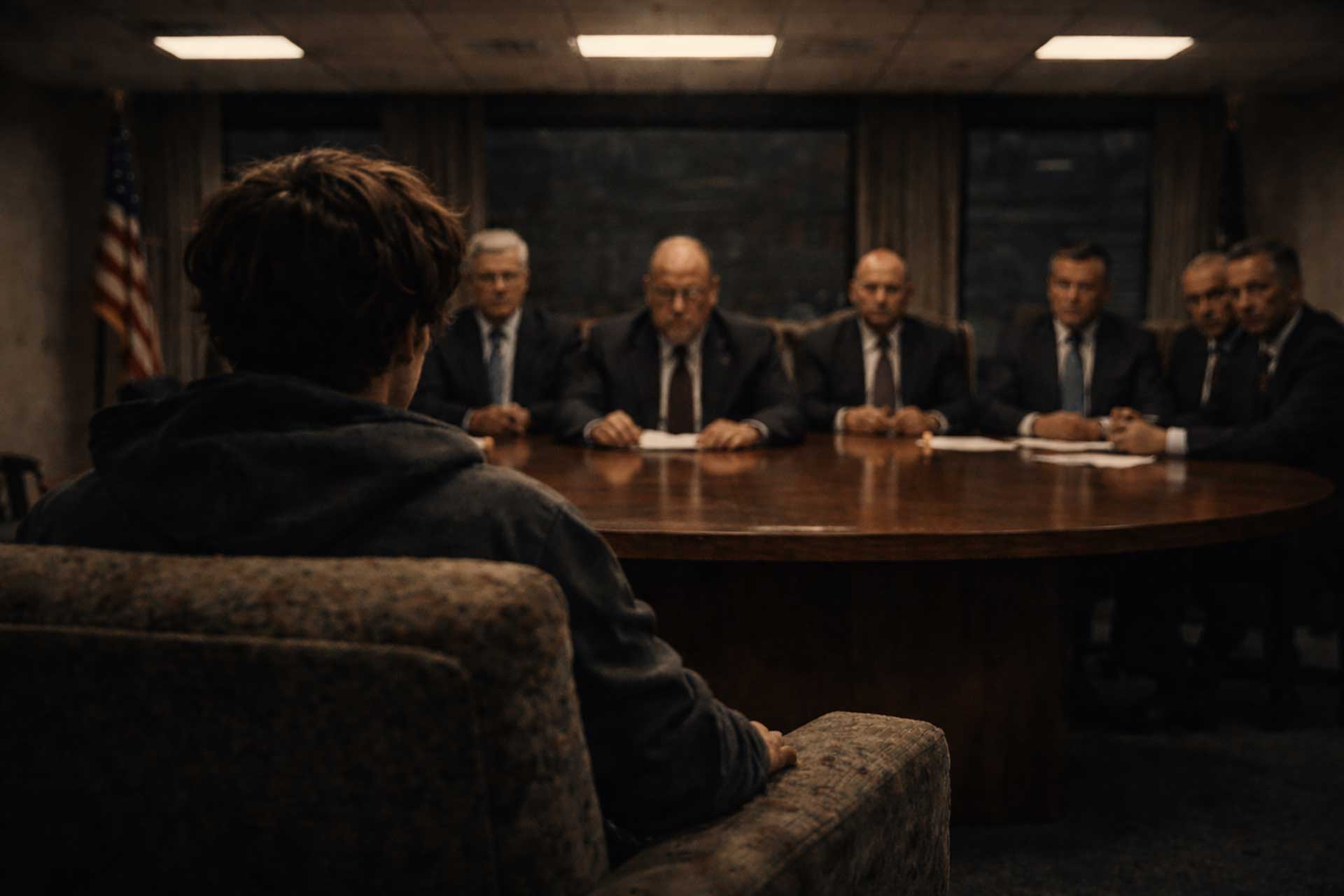
They wanted ownership. He chose freedom.
Rule #3) Never Pick One Lane — Build The Whole Highway
One day I’m writing music. The next I’m directing. The next I’m designing clothes, building environments, shaping a brand world, or chasing a new tool that feels like alien technology. To some people that looks like distraction.
To me, it’s integration.
Every medium speaks to the others. Every skill mastered becomes an instrument. When you stop seeing boundaries, you start creating symphonies.
This is why RIOT doesn’t behave like a traditional agency. We’re not here to execute in one lane. We’re here to build worlds — and the modern world doesn’t come in one format.
“People used to tell me I had to focus. ‘Pick one thing,’ they said. But my creative compass doesn’t work like that.”

Integration isn’t distraction. It’s composition.
Rule #4) Technology Is Your Paintbrush, Not Your Prison
My first studio was my dad’s hi-fi: a tape deck, a turntable, and a cheap plastic microphone that came free in the box — like destiny disguised as an accessory. That stereo was my spaceship.
Now I work with cinema robots, AI, 8K cameras, and sound tech that feels like it dropped out of a future timeline.
“Tools don’t make the art. Intention does. Tech should amplify, not replace. Everyone still needs a heartbeat to exist.”

The machine moves. The human decides why.
I’m not anti-technology — I’m anti-dehumanization. I don’t care how advanced the tool is if it can’t carry emotion. The future of creativity isn’t about replacing artists. It’s about expanding what artists can express.
Technology is the paintbrush. The artist is still the hand.
Rule #5) Reverse Time When You Have To
One day, my best friend called me. He was trying to show someone Bleed Electric. He searched… and nothing came up. No albums. No tracks. No trace.
He said, “Mate, your music’s gone.”

Deletion isn’t death. It’s a reset.
Every song. Every release. Wiped clean from the streaming world — like waking up to find your entire creative past erased.
For a moment, it felt like loss. But then something shifted. That silence felt intentional. Almost poetic. Like the universe had hit rewind.
“We heard the universe, and we’re bringing everything back — in reverse order.”
That idea didn’t just shape Bleed Electric’s resurrection. It clarified something deeper: sometimes the best way forward is back. Sometimes you have to retrace your signal until you find the origin. Sometimes the thing you thought was disappearance is actually reincarnation.
Deletion is not death. Energy persists. Data reforms. The prophecy continues.
RIOT Is A Mindset
People ask about “success” like it’s a finish line. To me, success is signal strength built into the act of creation itself.
Every song, every film, every design — everything that leaves our studios — is made to wake people up, to make them feel things in a world that’s numb from algorithms and repetition.
“The world doesn’t need more noise — it needs more individuality and courage. Viral ≠ Vital.”

RIOT by Flore, a custom artist celebration of our New York City based Creative Agency
RIOT is about fearless creators. People who refuse to sleepwalk through the static. People who wake up, plug in, and transmit their truth — raw, unfiltered, unafraid.
If you feel that frequency, you’re already part of it.
Most Importantly…
If someone tells you there’s no job for what you want to do, believe them.
Then build it anyway.
Because creation is a conversation — and if even one person feels the spark to start something of their own, this article was worth it!
Source inspiration: This essay was sparked by a conversation with MUG5 that originally appeared in Authority Magazine’s “5 Things I Wish Someone Told Me When I First Became an Artist.” If you want the full Q&A version, you can read it here: Authority Magazine interview on Medium.