
Sampled From the Underground
How underground culture shapes the mainstream through remix, not imitation
Culture doesn’t arrive fully formed. It leaks. It mutates. It travels hand to hand before it ever reaches a stage, a storefront, or a campaign deck.
Long before something becomes recognizable, profitable, or safe, it exists somewhere quieter. In basements. On street corners. In borrowed studios. In scenes that don’t call themselves movements yet. This is where culture is built — not as a product, but as a response. To boredom. To pressure. To exclusion. To the need to say something when no one is listening.
The underground isn’t a place. It’s a condition.
It’s what happens when people create without permission, without budgets, without audiences in mind. It’s where rules are bent because they haven’t been written yet. Where taste develops before language catches up. Where ideas are passed through people, not platforms.
Skate culture understood this long before brands did.

And eventually — inevitably — the mainstream hears it.
Not all at once. Not cleanly. But as echoes. Fragments. Samples.
Hip-hop understood this early. Sampling wasn’t theft — it was lineage. A way of acknowledging that nothing appears out of nowhere, that every sound carries history, and that meaning is created through transformation, not originality myths. Streetwear followed the same logic. So did punk. So did skate culture. So did every scene that ever mattered.
The underground doesn’t get copied. It gets replayed.
What separates meaningful influence from hollow imitation is fluency. Knowing where something came from. Knowing why it existed. Knowing what must be preserved — and what can be flipped. The problem isn’t that the mainstream is inspired by the underground. That’s how culture works. The problem is when inspiration loses context. When remix turns into replication. When surface replaces substance.
This is where most attempts fall short.
They chase the look without understanding the language. They borrow aesthetics without absorbing the code. They want the energy without the tension that created it.
At RIOT, we’ve never believed culture is something you invent. It’s something you listen to. Something you study. Something you live. Something you respect enough to reinterpret, not imitate. Our job isn’t to extract. It’s to translate. To take what’s happening beneath the surface and help it speak at scale — without losing its meaning.
Because everything people connect with was underground once.
And the future is already playing — if you know how to hear it.
The Source Material
The underground doesn’t start with an aesthetic. It starts with conditions.
Limited resources. Limited access. Limited permission. When people are cut off from traditional paths — to platforms, to capital, to visibility — they build their own. Not out of rebellion at first, but out of necessity. You make what you need with what you have. You share it with the people standing next to you. Over time, that repetition becomes language.
This is how scenes form. Not through strategy, but through proximity. Through shared references. Through the quiet agreement that what matters here might not matter anywhere else. The underground is shaped by constraint, but defined by commitment. You show up because you care, not because there’s an audience waiting.
“The DC Punk Scene was people who were our friends… the idea was to document the community.”
— Ian MacKaye
Source: The Skinny — “Always Read The Label: Dischord” (Nov 12, 2006)
Taste develops in isolation before it’s ever validated. People dress for each other. Music is made for rooms that barely hold it. Style emerges not to be seen, but to be recognized by the few who understand it. This is where identity takes shape — internally, collectively, long before it becomes visible.
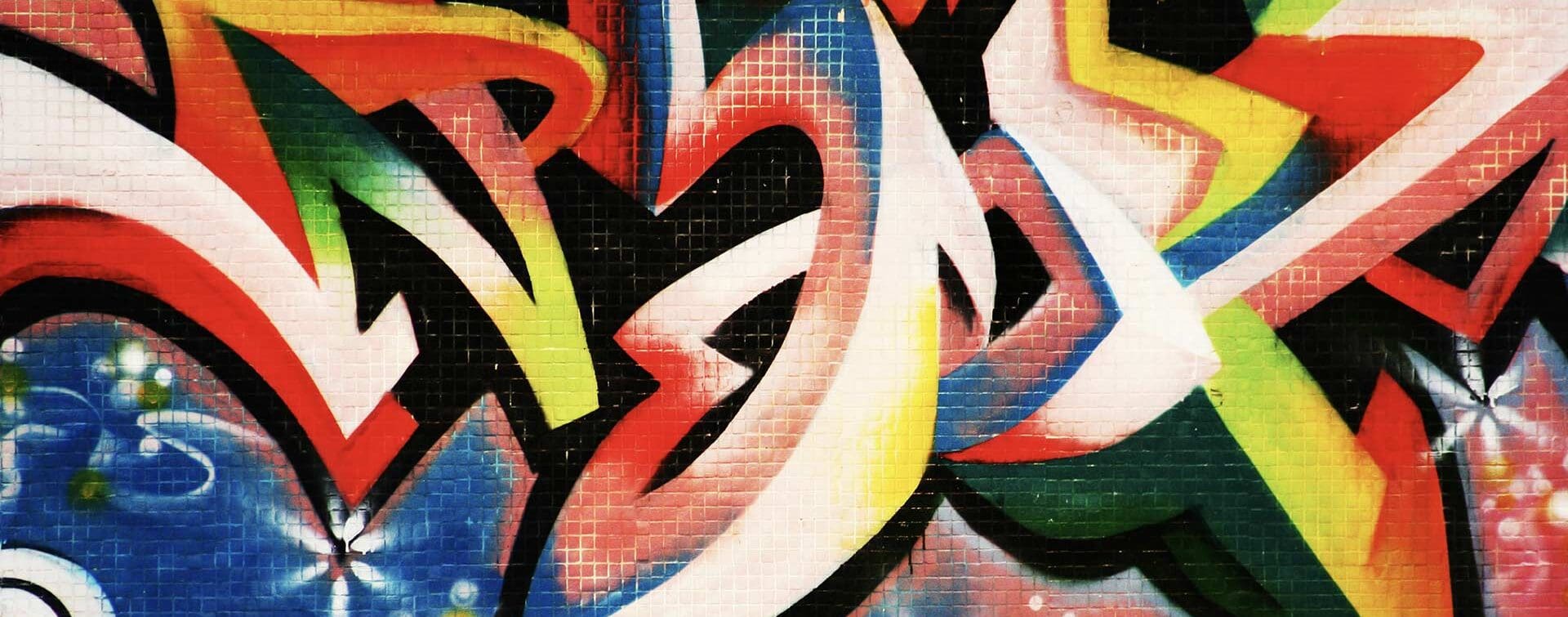
When people are locked out, they build a language on the walls.
Every subculture starts this way. Punk didn’t begin as a look. Hip-hop didn’t begin as a genre. Skateboarding didn’t begin as a lifestyle. These things became recognizable only after they had already been lived. The mainstream never witnesses the beginning. It encounters the residue.
Streetwear followed the same path. Before it was product, it was communication. A way of signaling belonging. A uniform designed for specific streets, climates, rhythms, and codes. Logos didn’t exist to scale — they existed to identify. To say: this is for us.
The underground is built on repetition and refinement, not virality. Ideas are tested in motion, adjusted in real time, discarded without apology. There are no case studies here. Only feedback loops. Only lived experience.
By the time something reaches the surface, it has already survived years of quiet iteration. What looks like a sudden trend is usually the result of patient, uncredited evolution. The source material has already done the work.
The Sample
The first moment of contact is never clean.
The underground doesn’t announce itself to the mainstream. It’s overheard. A silhouette caught out of context. A sound leaking out of a car window. A kid dressed in a way that feels intentional but unreadable. At first, it registers as friction — something unfamiliar that interrupts the expected.
This is how sampling begins. Not with understanding, but with curiosity.
“Back in them days, before mp3’s clearly, I would just buy things just based off of the record cover alone. Sometimes I didn’t even know who the group was, but there might just be something about the cover that made me buy it.”
— Ali Shaheed Muhammad
Source: Red Bull Music Academy (Lecture Transcript)
Someone notices a detail before they can name it. A rhythm before the song. A logo before the brand. A posture before the uniform. The sample is taken instinctively — pulled from its original environment and held up to the light. Sometimes respectfully. Sometimes clumsily. Always incomplete.
The earliest samples don’t travel far. They move through people who are paying attention — photographers, designers, DJs, editors, skaters, musicians. Translators, not distributors. These are the figures who recognize energy before it becomes language.
At this stage, nothing has been simplified yet. The codes are still intact. The references are still local. The meaning hasn’t been flattened for scale. What’s being shared is texture, not explanation.
This is the fragile moment. Where something can be honored — or misunderstood.
Because once a sample is taken, it will be replayed. And how it’s replayed determines whether culture is carried forward — or hollowed out.
For a deeper look at how sampling has carried cultural ideas forward in music — honoring lineage instead of erasing it — see our earlier piece: Sampled: The Originals Behind Iconic Hits, which traces how iconic tracks themselves were built on the shoulders of what came before.
The Flip
The flip is where intent matters.
Sampling alone doesn’t guarantee understanding. A sample can be honored, expanded, and carried forward — or it can be flattened into something easier to consume. The difference isn’t taste. It’s care.
“Everything I do is for the 17-year-old version of myself.”
— Virgil Abloh
When a flip is done well, it preserves tension. It keeps the friction that made the original meaningful. It doesn’t smooth the edges too quickly or explain away the discomfort. It understands that what gave something power in the underground wasn’t polish — it was purpose.
This is how culture evolves without erasing itself. Ideas are replayed in new contexts, for new audiences, without losing their original frequency. The past isn’t discarded. It’s reintroduced.
But when the flip is rushed, something else happens.
The surface survives, but the substance doesn’t. The silhouette remains, but the posture changes. The symbols stay intact, but the language they came from disappears. What was once lived becomes decorative. What was once earned becomes applied.
This isn’t malice. It’s distance.
Most missteps happen when culture is viewed from the outside. When it’s observed instead of inhabited. When decisions are made without understanding the conditions that produced the work in the first place. The underground doesn’t resent being noticed — it resents being misunderstood.
The most successful flips are led by translators. People who move between worlds without needing to announce it. Designers, artists, musicians, and creatives who understand that remix isn’t about ownership — it’s about stewardship.
This is why some work feels inevitable and some feels empty. Why certain moments resonate long after release while others expire on impact. One is built on listening. The other is built on assumption.
The flip isn’t a moment of arrival. It’s a responsibility.
Handled with care, it allows culture to travel without losing its center of gravity. Handled poorly, it turns meaning into mood and history into reference.
The future doesn’t belong to those who discover culture first.
It belongs to those who know how to carry it forward.
Credit Where It’s Due
Nothing meaningful arrives alone.
Every idea carries fingerprints. Of places. Of people. Of scenes that shaped it long before it was visible. Credit isn’t about morality or etiquette — it’s about continuity. It’s how culture survives its own success.
In the underground, credit is implicit. It lives in references, gestures, shared memory. You don’t need to announce where something came from because everyone in the room already knows. Lineage is understood, not labeled.
Problems arise when work leaves that room.
As ideas travel outward, their origins can blur. Context thins. References become aesthetics. Without intention, what was once understood collectively becomes abstracted individually. Credit fades not because of malice, but because the chain was never made visible.
Those who move carefully make the chain explicit.
They leave the seams exposed. They allow the original to remain present — audible, visible, legible. They treat influence as a conversation, not a resource. Credit becomes preservation. It keeps culture intact as it scales.
“I think perfection is ugly. Somewhere in the things humans make, I want to see scars, failure, disorder, distortion.”
— Yohji Yamamoto
This is why certain figures matter more than their output alone suggests. Not because they invented something new from nothing, but because they understood how to carry what already existed without collapsing it. They knew when to speak, when to listen, and when to leave space for the source to remain itself.
Credit isn’t a footnote. It’s a signal.
It tells future creators where to look. It keeps doors open instead of quietly closing them behind success. It reminds the mainstream that what feels new is often simply something newly acknowledged.
Culture doesn’t ask to be protected from exposure.
It asks not to be disconnected from its origins.
Translation, Not Extraction
The future doesn’t need more cultural discovery.
Everything worth paying attention to already exists somewhere. In scenes that don’t advertise themselves. In communities that aren’t waiting to be validated. In ideas that are still being tested quietly, far from the spotlight.
The real work now is translation.
Not extraction. Not acceleration. Not stripping meaning down to what performs fastest. Translation requires patience. It requires proximity. It requires staying close to the source long enough to understand what must remain intact — and what can evolve.
This is where creative stewardship matters.
To translate culture responsibly is to accept that not everything should be simplified. That some tension is essential. That clarity doesn’t always mean explanation. Sometimes it means restraint. Sometimes it means letting the work arrive unfinished, unresolved, still carrying its history with it.
At RIOT, this is how we approach everything we touch.
We don’t chase culture. We listen for it. We spend time inside it. We learn its language before attempting to speak. Our role isn’t to invent meaning where none existed — it’s to help meaning travel without losing its weight.
Because the underground doesn’t need saving. And the mainstream doesn’t need instruction.
What’s needed are translators who understand both — and care enough to move between them without collapsing one into the other.
“The role of the artist is exactly the same as the role of the lover. If I love you, I have to make you conscious of the things you don’t see.”
— James Baldwin
The future belongs to those who know how to carry culture forward.
Not louder. Not faster.
But with care.

