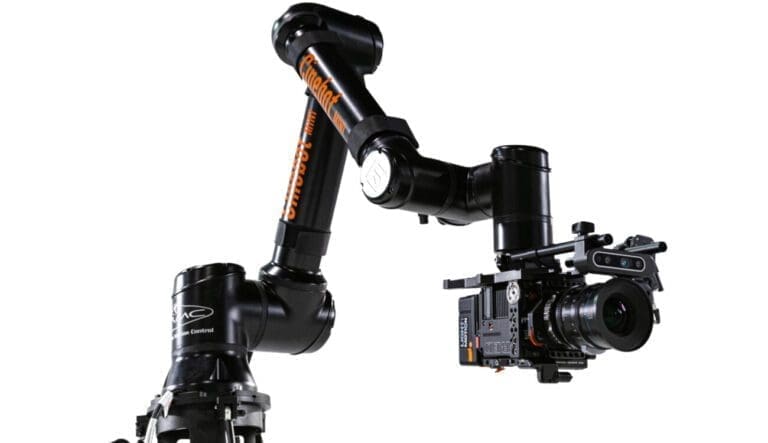
What is cinematic robotics?
Cinematic robotics is the camera on a robot. A high-speed robotic arm, the kind built for factory floors and adapted for film, carries the camera through a move that has been programmed to the millimeter and the millisecond, and then does it again, identically, as many times as the shot needs. The family includes the large arms that can whip a camera around a product at speed, smaller tabletop rigs for macro work, and motion control systems that run a camera on a track, a crane or a head along a path that can be replayed exactly.
What separates it from a crane or a gimbal is repeatability. A human operator can perform a beautiful move once; a robot can perform the same move fifty times, which is what lets the visual effects team layer passes, the product team swap variants and the editor match a live-action plate to a computer-generated element frame for frame. Speed is the other difference. A robotic arm can move a camera faster than any human and stop dead, which produces the whipping, snapping product shots that have become a signature of modern beauty, luxury and automotive advertising.
Why it matters
Why cinematic robotics matters
It makes shots possible that were not. A camera that rushes a watch face, orbits a bottle at speed and settles on a logo in a single unbroken move cannot be done by hand, and audiences have come to read that kind of motion as the language of premium product film. It also makes shots exact. When a shot has to be repeated with the lights changed, the product changed or a second element added for compositing, the robot delivers frames that line up without a day of fixing in post.
The economics matter too. A robotic rig is expensive per day, but a product shoot that would take three days of manual setups can be done in one once the moves are programmed, with every take usable. For a brand that shoots the same product family every season, the programmed moves are an asset: the same camera path can be run again next year with the new product in the same place.
In practice
How cinematic robotics works in practice
- 01
The work begins in pre-production, where the director and the robotics operator design the moves. Many rigs let the move be built in 3D software first, with a model of the set and the product, so the shot can be previsualized and timed before anyone arrives. On the day, the arm is set up with its safety perimeter, the camera and lens are mounted, and the move is programmed or loaded, then rehearsed slowly and brought up to speed. Lighting is built around the move, because a camera traveling that fast passes through a lot of light. Then the takes run: the same path, with the operator adjusting speed, timing and triggers for practical effects, and the product stylist resetting between passes.
- 02
For motion control compositing, the rig records every move so that it can be replayed with a different foreground, a clean background plate or a green screen, and the passes are combined in post. Specialist operators run the rigs, usually through a rental house, and the director's job is to know what the machine can do and to design the shot for it rather than retrofit a manual idea.
Watch out
What people get wrong about cinematic robotics
Using it because it is impressive. A robotic move that serves no idea is a very expensive way of saying the brand had budget. The best robotic shots are the ones where the speed or the precision is the point: the product revealed in a way a hand could not, or a composite that needed exact repetition.
The other mistake is underestimating the planning. A robot does exactly what it is told, which means the shot has to be designed before the day. Teams that arrive expecting to find the move on set spend the rental on rehearsals.