What is cinematic choreography?
Cinematic choreography is the design of movement in a film. Not only the dancer's or the athlete's movement, but the camera's path through the space, the timing of a reveal, the way a light sweeps across a product and the way all three are rehearsed to meet at the same instant. A shot where the camera pushes in as the subject turns, catches the glint on a watch face and settles as the music hits is choreographed in exactly the sense a dance is: every element has a mark, a count and a cue.
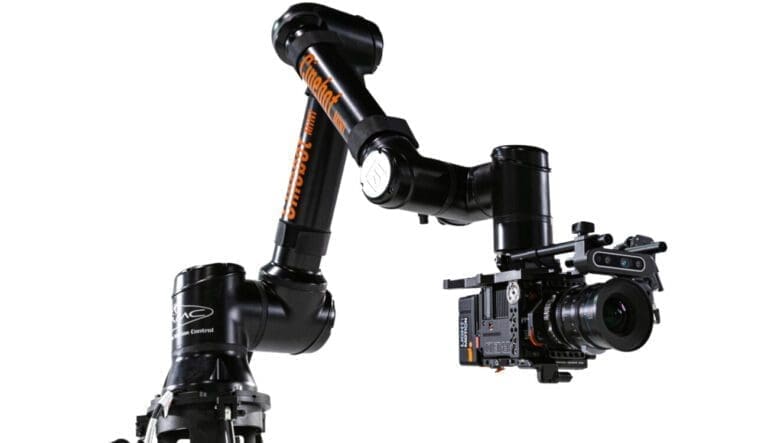
The term has come into wider use with motion control rigs and robotic camera arms, which can repeat a move to the millimeter and sync it with lighting, turntables and playback. But the practice is as old as the tracking shot. What the technology changed is precision: a move that once depended on a dolly grip's feel can now be programmed, previewed and repeated until the take is perfect.
Why it matters
Why cinematic choreography matters
Movement is how a film creates feeling without words. A slow orbit feels reverent; a whip pan feels urgent; a camera that arrives at the product a beat after the music does feels like a punchline. When the movement is designed, every frame of a shot is doing something. When it is improvised, the edit has to manufacture the energy later with cuts, and the result is busier and less confident.
For brands, choreography is also what makes production worth its cost. A luxury watch, a lipstick, a sneaker in a sport film: the product is small, the budget is large and the audience has seen a thousand product shots. A choreographed move, where camera, light and object meet precisely, is what separates a frame people remember from one they scroll past.
In practice
How cinematic choreography works in practice
- 01
It starts on paper. The director and the cinematographer storyboard the shot and then block it: where the subject moves, where the camera goes, what the light does, all against a timeline, often the music. For complex moves that becomes a previsualization, a rough animated version of the shot that lets everyone agree on the timing before a single light is rigged. Then the move is built, by hand on a dolly, crane or gimbal, or programmed into a motion control rig that will repeat it identically.
- 02
On set the choreography is rehearsed like a scene. Talent walks the marks, the camera runs the move, the lighting cues are timed, and adjustments are made until the elements land together. With motion control the same move can be shot several times with different elements, a product pass, a lighting pass, a talent pass, and composited in post into one impossible shot. Without it, the crew relies on repetition and a sharp first assistant.
- 03
In the edit, choreographed shots tend to be left alone. The whole point is that the movement carries the moment, so the editor's job is to place them against the music and get out of the way, which is why choreographed films often feel calmer and more expensive than their cut count would suggest.
- 04
Everyone on the floor works from the same clock. The playback track, usually the music or a click, runs with timecode so the camera operator, the lighting board and the talent are cueing off one count rather than three. The move lives on a shot card: start and end marks, lens, frame rate, move speed, and the cue points where the light shifts or the product turns. When the card and the clock agree, the rehearsal is short and the takes match.
At RIOT
Cinematic choreography at RIOT
On jewelry films for Tiffany & Co., the piece is tiny and the camera move is the story: how the light travels across a stone, when the setting is revealed, how long the camera holds before it leaves. Every one of those is designed before the shoot and rehearsed on the day, because at that scale a millimeter is the difference between a frame that sparkles and one that does not.
Watch out
What people get wrong about cinematic choreography
Thinking it means motion control. The rig is one tool; the choreography is the design, and a handheld shot can be as precisely choreographed as a robotic one. The other mistake is moving the camera because it can move. A move with no reason reads as restlessness. The best choreography is often invisible, because every movement is motivated by something the audience is meant to feel.