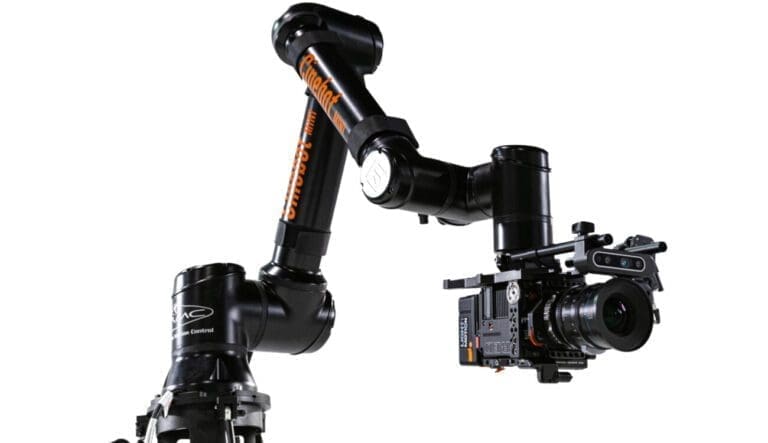
What is a motion-controlled camera system?
A motion-controlled camera system, usually shortened to motion control or moco, is a rig that moves a camera under computer control rather than by hand. A robotic arm, a motorized slider, a crane or a turntable is programmed with a path, a speed and a set of focus and exposure changes, and it executes that move identically every time. The point is repeatability. A human operator can make a beautiful move once; motion control makes the same move a hundred times, to the frame, which unlocks effects that are impossible any other way.
The technology came out of visual effects in the 1970s, where repeatable moves let filmmakers shoot models and live action as separate passes and combine them. Today it is as likely to be found in a tabletop studio shooting a lipstick as on a film set. Modern rigs range from compact desktop robots to high speed arms that can whip a camera across a product in a fraction of a second, and most are programmed from a laptop by a specialist operator.
Why it matters
Why motion control matters
Repeatability is a creative tool. When a move can be repeated exactly, a product can be shot in several states (full, empty, exploded, lit three ways) and the passes layered into one shot. A person can appear twice in the same frame. A liquid pour can be caught at the perfect instant on the tenth attempt with the camera in precisely the same place as on the first. For high speed work, a programmed move can be faster and smoother than any hand, which is why the most arresting product and beauty films of the last decade have a robot behind them.
It matters commercially too. Motion control makes variation cheap: once the move is programmed, every colorway, every size and every market's version of a product can be shot in the same move in minutes, giving a brand a matched set of films rather than one hero and a lot of compromises. For luxury houses that need a watch, a bag or a fragrance to move with the same precision as the object itself, the rig is the only honest way to do it.
In practice
How a motion-controlled camera system works in practice
- 01
The work begins in pre-production. The director and the motion control operator design the move, often previsualized in software, and plan the passes it will be used for. On set the rig is built, calibrated and programmed, which takes time: a move might be refined over an hour before the first real take. Lighting, focus and any synchronized elements, such as a turntable, a liquid pump or a high speed light trigger, are tied to the move's timeline so that everything fires in the same place on every pass.
- 02
Then the passes are shot: the product, the clean plate, the alternate states, the hands, the talent. In post the passes are composited, which is where the repeatability pays off, since every layer lines up without tracking or warping. The crew for a motion control day typically adds an operator and a technician to the usual unit, and the rig itself is rented by the day from a specialist house. The best results come when the creative is designed for the rig rather than the rig added to the creative.
Watch out
What people get wrong about motion control
Using it for its own sake. A motion control move that could have been done on a slider by a good operator is a day rate spent on nothing the audience will notice; the rig earns its place when the shot needs repeatability or a speed and precision a human cannot match. The second mistake is under-planning. Motion control is slow to set up and fast to shoot, so a day with no previsualization and a loose shot list burns its hours on programming while everyone watches.
The third is forgetting the post. The whole value of the passes is realized in compositing, and a project that budgets for the rig and not for the finishing ends up with beautiful plates and no shot. The fourth is assuming it is only for products. Motion control has become a storytelling device in its own right, from matched moves across locations to the impossible shot that makes a brand film memorable.