What is motion capture cinematography?
Motion capture records movement rather than images. A performer wears a suit with markers or sensors, an array of cameras or inertial trackers follows every joint, and the result is a skeleton of data that moves exactly as the person moved. That data can drive a digital character, an animated product, a creature or an abstract form. Motion capture cinematography is what happens when a cinematographer treats that process as filmmaking: lighting the volume, directing the performance, choosing the lens and the camera move for the virtual camera, and composing the final shot as carefully as a live-action one.
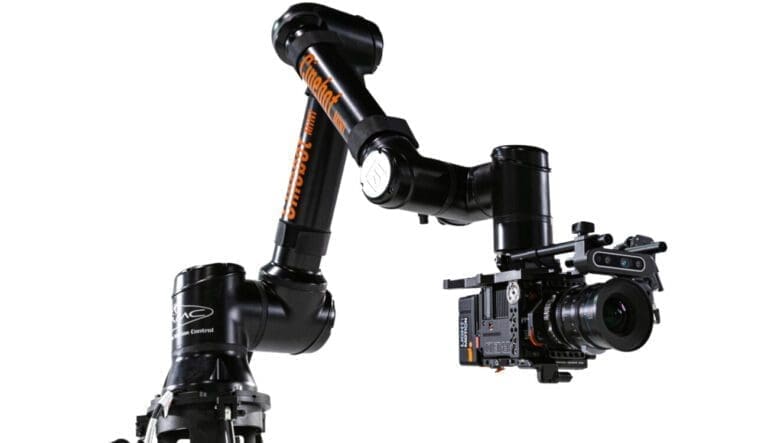
The term also covers the capture of the camera itself. A tracked camera on a stage records its own position and lens data, so the digital environment behind the actor can move in step with it. That is the foundation of virtual production, where a wall of LED screens shows a world that shifts as the camera does, and of the hybrid shots where a real presenter walks through a space that was never built.
Why it matters
Why motion capture cinematography matters
It is the bridge between performance and animation. A fully animated character moves the way an animator imagines; a captured one moves the way a person actually does, with the weight, hesitation and timing that make an audience believe. For brands that makes a mascot, a product character or an animated world feel alive rather than cartoonish, and it lets a real performer bring the thing to life on set, with a director in the room, instead of in a render queue months later.
It also changes what a small production can afford. A captured performance can be reused across formats, re-framed with a different virtual camera, dropped into a new environment or re-timed, without a second shoot. A sports brand can capture an athlete once and build a season of content from the data. A fashion house can put a digital garment on a real walk.
In practice
How motion capture cinematography works in practice
- 01
The shoot happens in a capture volume: a space ringed with tracking cameras, calibrated so every marker can be seen from several angles at once. The performer is suited and calibrated, the director blocks the scene as they would on any set, and the takes are recorded as data alongside reference video. If the face matters, a head-mounted camera captures expressions separately. If the shot will be composited with live action, the real camera is tracked too, so the plates and the data share one coordinate system.
- 02
In post, the data is cleaned (markers get lost, limbs cross, feet slide) and retargeted onto the digital character's skeleton. Animators refine the performance, the virtual cinematographer sets the camera and the lighting in the 3D scene, and the shot is rendered and composited. The cinematographer's decisions, lens, movement, light, are made twice: once in the volume, where they shape the performance, and once in the scene, where they shape the image.
Watch out
What people get wrong about motion capture cinematography
Assuming the data is the shot. Raw capture is a skeleton of points; the image people see is the product of animation, lighting, rendering and compositing, and the cinematography happens in that second half as much as in the first. The second mistake is thinking it removes the need for a director. Captured performance is still performance, and a performer in a gray suit on a bare stage needs more direction, not less, because nothing around them is real.
The third is treating it as always cheaper than live action. For one shot of one character it rarely is; the volume, the suits, the cleanup and the rendering are real costs. It pays off when the performance will be reused, when the character cannot exist on camera, or when the environment would be impossible to build. The fourth is forgetting reference. Capture without reference video leaves the animators guessing at what the performance meant.