

White Paper
White papers are in-depth reports or analyses that provide valuable information and insights on a specific topic or project, often showcasing a brand’s expertise and authority.
What is a White Paper?
A white paper is a deep-dive document that blends expertise with persuasion. It’s not a blog post. It’s not a sales deck. It’s the sharp, strategic middle ground — where thought leadershipLead the conversation—thought leadership positions brands and individuals as industry experts by sharing bold ideas, insights, and innovative perspectives. meets business impact. White papers explore a topic with authority, break down complex ideas, and guide the reader toward a clear understanding (and often, a clear next step). Think of it as a manifesto in a lab coat — grounded in facts, dressed for influence.
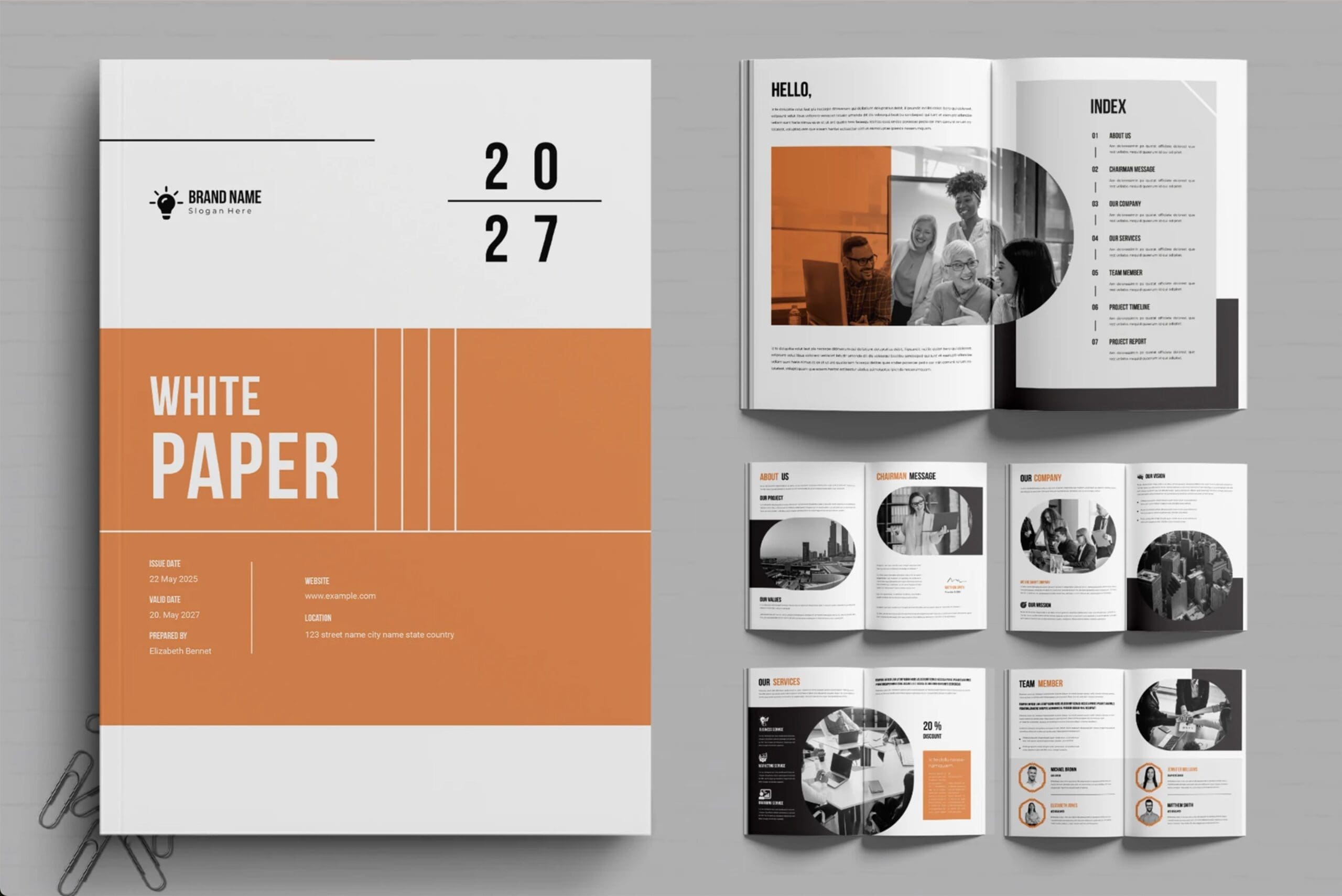
How Do I Make a White Paper?
Making a white paper isn’t just about dumping data into a doc. It’s about crafting a compelling argument with clarity, structure, and style. You’re building trust. You’re showing thoughtThe spark that starts it all—ideas fuel campaigns, shape strategy, and turn bold thinking into unforgettable creative. leadership. And yes — you’re making it look good while you’re at it.
Here’s how to make a white paper that actually hits:
1. Start with a Strong Question
Every great white paper begins with a real problem. What’s the challenge your audienceThe heartbeat of every campaign—understanding and engaging the right audience is the key to crafting messages that resonate and drive action. is facing? What’s misunderstood in the industry? Lead with tension, not fluff.
2. Do the Research
This isn’t the place for guesswork. Gather data, insights, case studies, expertDeep knowledge, niche focus—a specialist brings expertise in one area, offering high-value insights and precision. quotes — whatever backs up your point. The goal is to inform, not just impress.
3. Outline with Intention
Structure matters. A solid white paper usually includes:
-
An intro that sets the stage
-
A problem statement
-
An analysis or point of view
-
Supporting evidence
-
A conclusion or recommendation
-
A subtle but strategic call to action
4. Write Like a Human (With Brains)
Use clear, confident language. Keep it smart, but never stuffy. Avoid jargon for the sake of sounding impressive — clarity wins. Tell a story, even when dealing with stats and strategy.
5. DesignFunction meets form—design shapes how brands look, feel, and connect through everything from logos to layouts. for Readability
Break up walls of text. Use charts, pull quotes, infographics, and headers to guide the reader. Good design doesn’t just make it pretty — it makes it digestible.
6. End with Purpose
Wrap it up with something memorable — a bold insight, a visionThe spark that starts it all—a concept is the big idea that shapes campaigns, guiding everything from visuals to messaging. for the future, or a clear next step. Leave them thinking “these people get it.”
Dive deeper
Long-Form ContentDepth that drives impact—long-form content goes beyond the surface, offering detailed insights, compelling storytelling, and thought leadership that builds authority., Content MarketingValue before the sell—content marketing delivers meaningful stories, insights, and solutions that build trust and drive engagement., SEO, E-books and Digital DownloadsValue in every click—e-books and digital downloads turn knowledge into lead-generating assets, positioning brands as industry authorities., Editorial StrategyMore than words—editorial strategy aligns storytelling with business goals, ensuring content engages, informs, and drives action across every platform.