
- Client
- Tiffany & Co.Founded in New York, 1837
- Film
- The Complete History1837 to 2022
- Built with
- The Tiffany & Co. ArchivesResearch decks, photographs, catalogues
- Concept
- A history of mediaFrom paper to the present
- When
- September to October 2022A ten-minute cut, then five
A shop on Broadway, a clock held up by Atlas, a ring raised on six prongs, a colour you can name without a word: Tiffany asked us to tell 185 years of its story, and to get every word of it right.
In the autumn of 2022 Tiffany & Co. asked us for a film documenting its whole history, a brand timeline that was true in both spirit and detail. History is the hardest part to find and to get right, so our work began in the Tiffany archive.
Built with the archivists
Tiffany’s archivists became our co-authors. They opened research decks on the subjects that define the house: the Blue Book, Atlas, the New York, London and Paris flagships, the Tiffany Setting, Tiffany Blue, Return to Tiffany, Jean Schlumberger and Bird on a Rock. Then they sent the images in waves, oldest first, almost three hundred photographs of the New York flagship alone, with the hero objects from the house’s Vision & Virtuosity exhibition still to come.
Every date, name and claim in the film went back to that initial research. Which store came first, what the first day took at the till, the year a gemstone was named: the archive checked it, and we built the story on it.
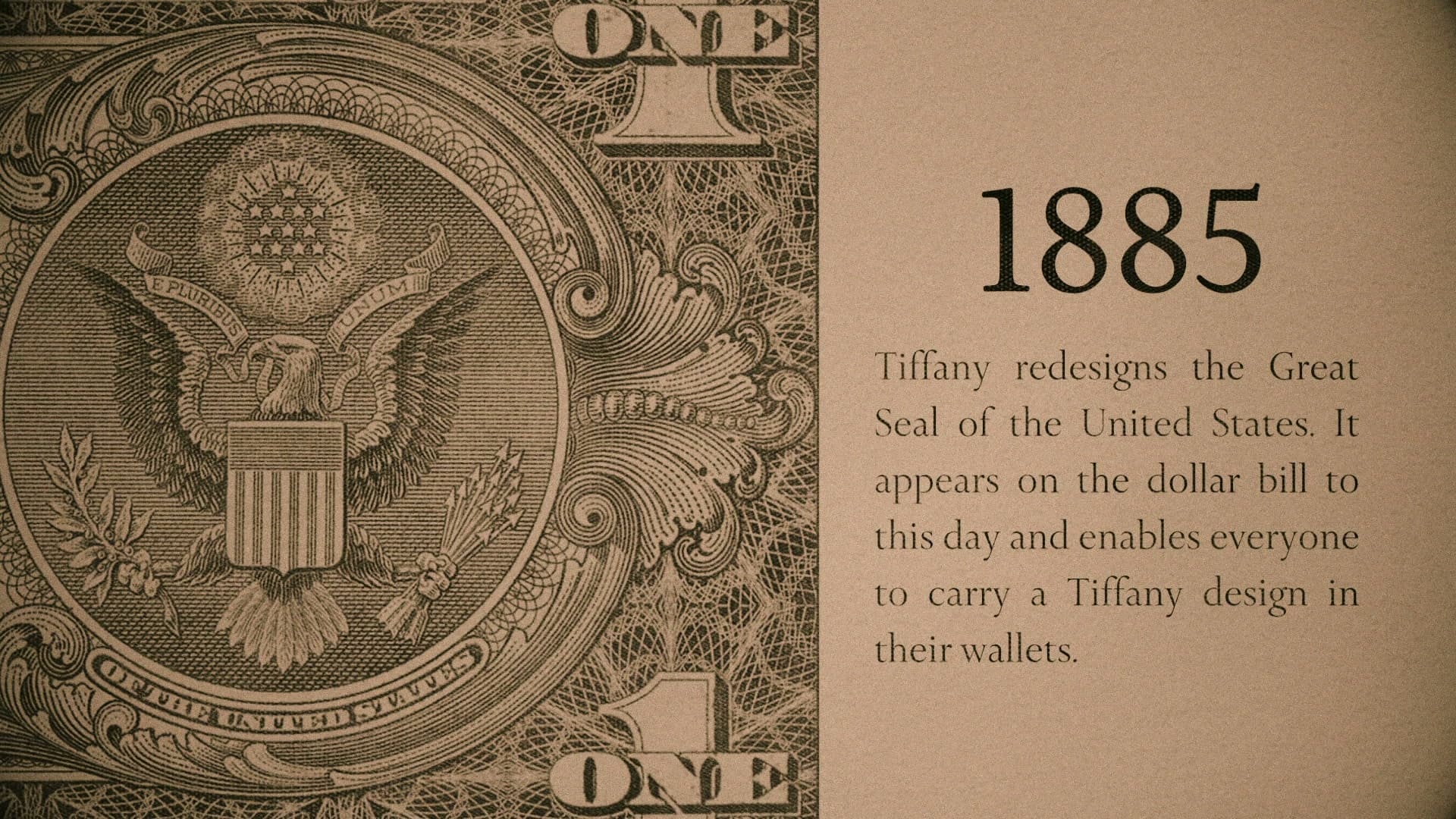
Our favourite find was hiding in plain sight. In 1885 Tiffany redesigned the Great Seal of the United States, and that seal still appears on the back of the one-dollar bill. Anyone with a dollar in their wallet is carrying a Tiffany design.


A history of media
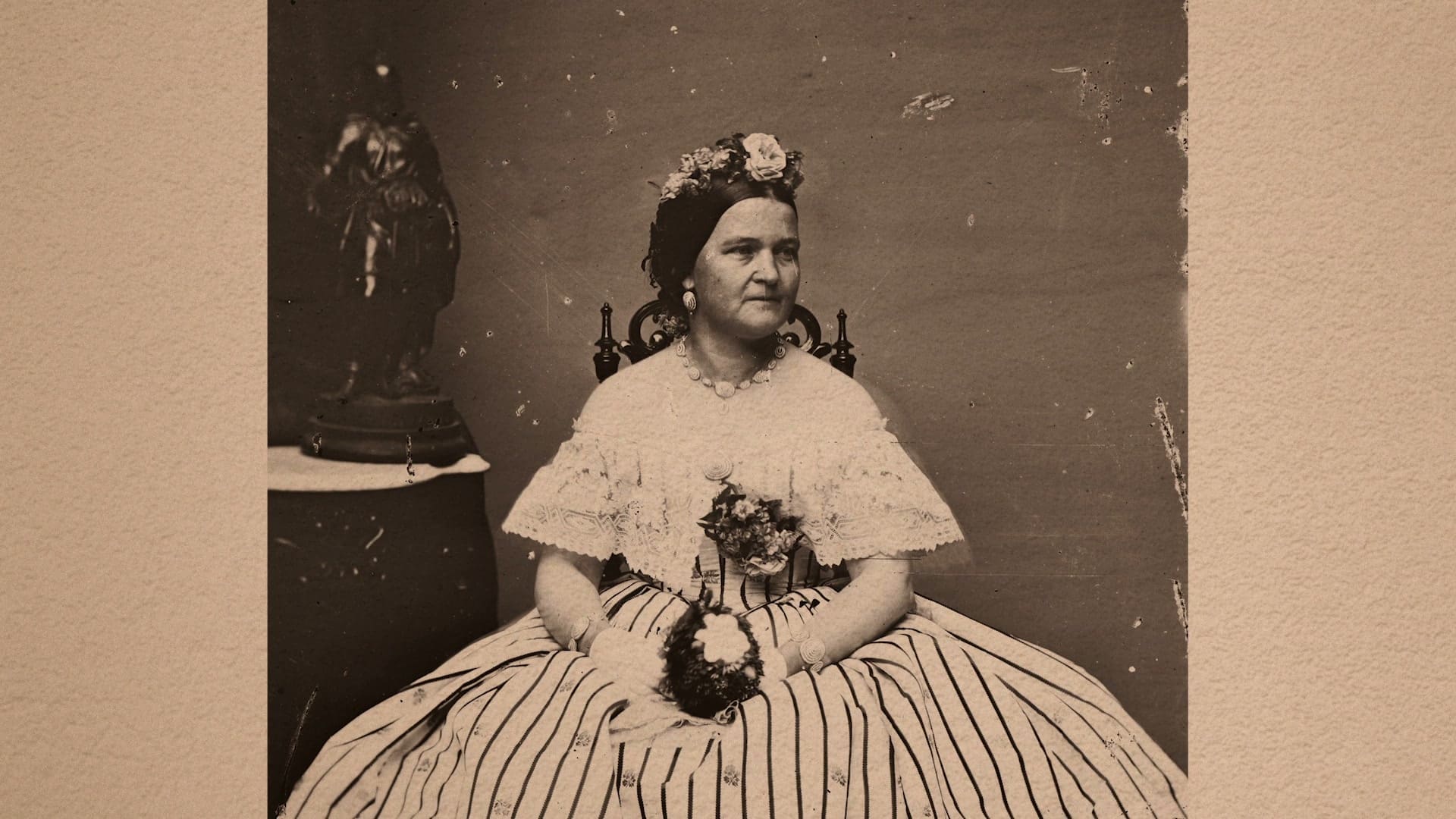
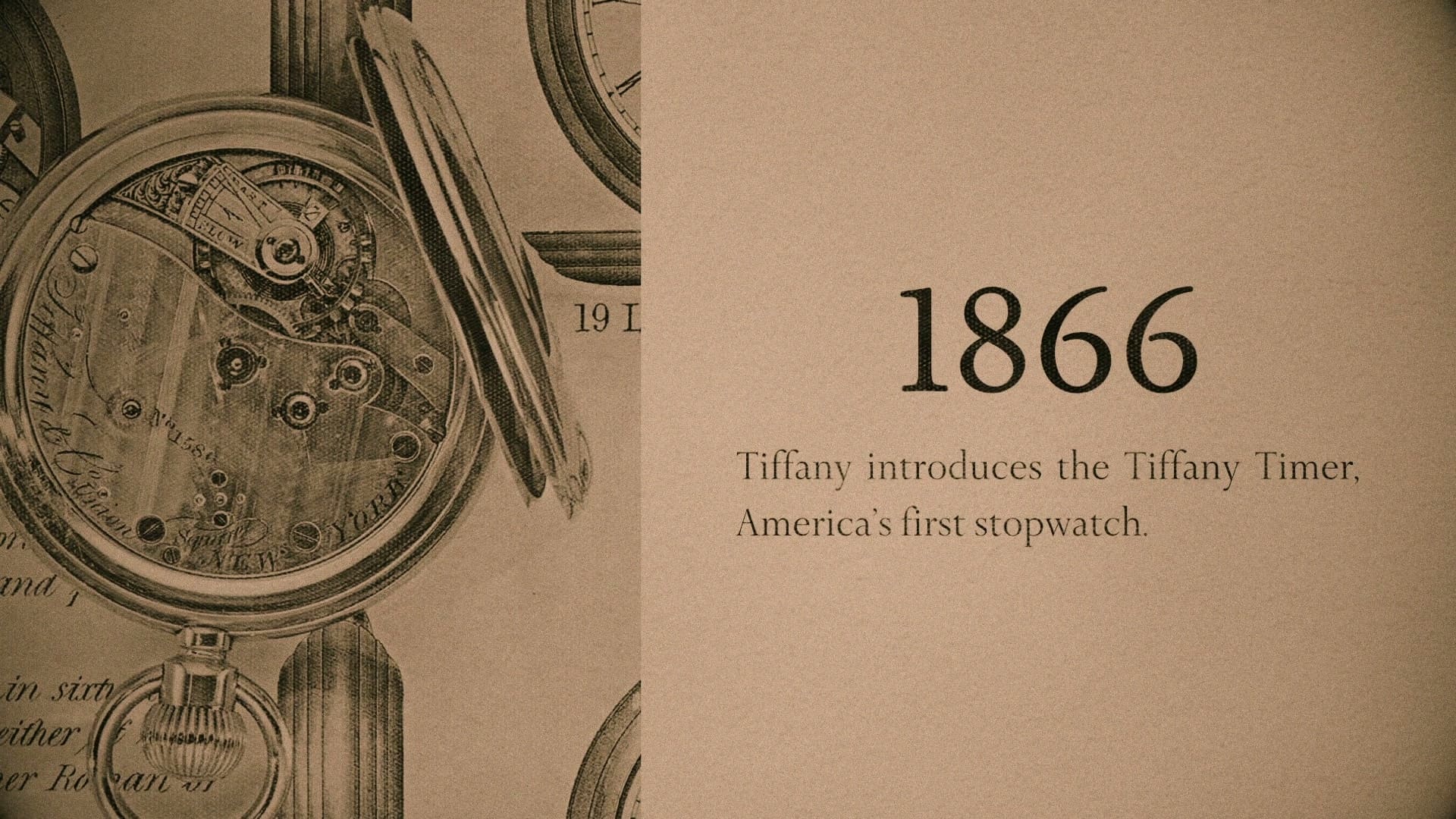
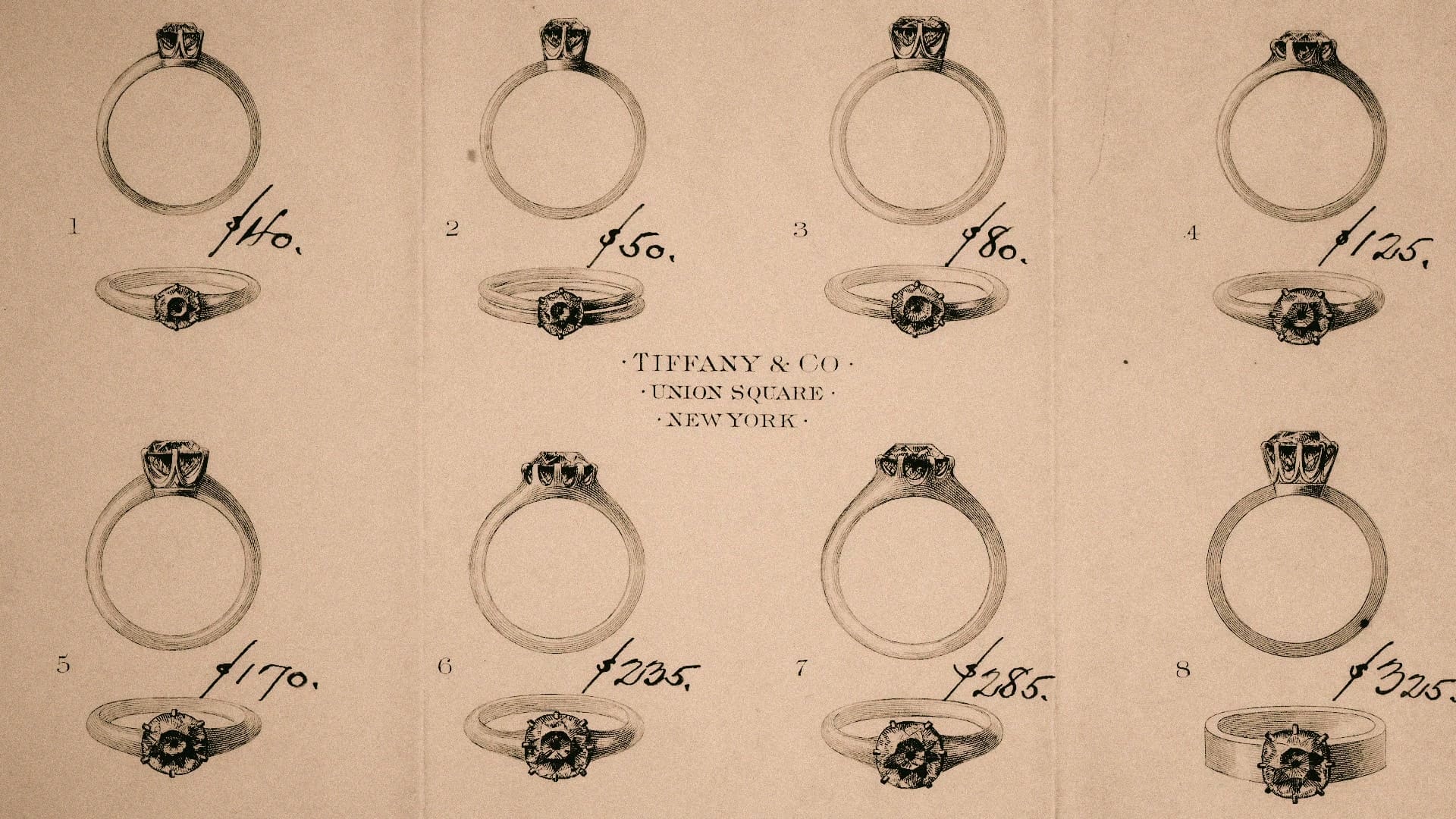
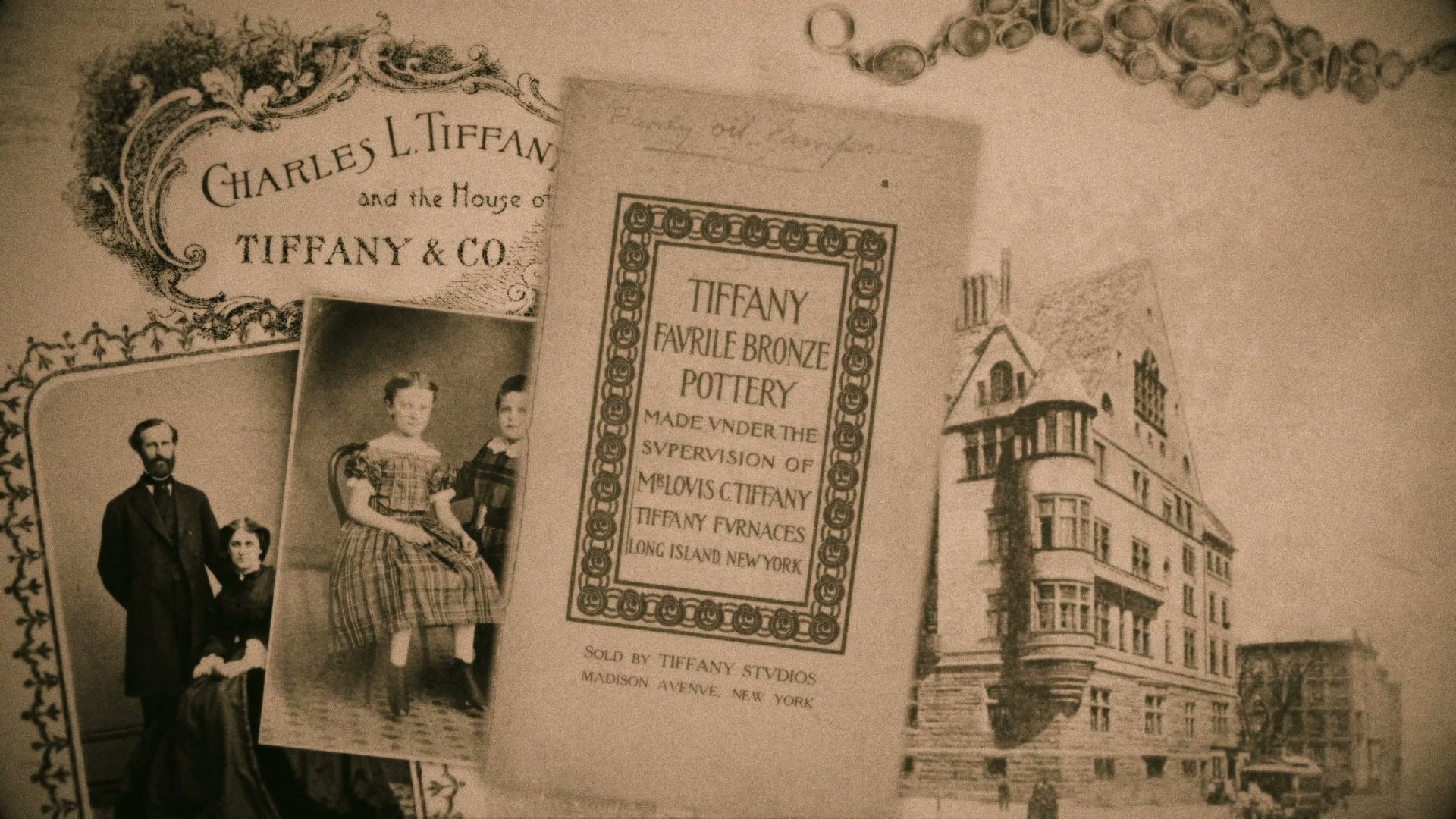
We told Tiffany’s history through the history of the media that recorded it. The film begins on paper and ends on a screen, and every period wears the format of its time: its colour, its texture, its aspect ratio, its type and its music. Newer footage was aged to sit inside the era it describes, and every paragraph stays on screen long enough to be read. The first cut ran ten minutes, twice the length anyone expected, because 185 years deserved the time.
The soundtrack travelled through time with the pictures. We can’t play it here, but you can hear some of it: Scott Joplin’s “Maple Leaf Rag”, Ray Noble and Al Bowlly’s “All I Do Is Dream of You”, Glenn Miller’s “In the Mood”, Frankie Valli’s “Can’t Take My Eyes Off You”, Diana Ross’s “The Boss”, Eurythmics’ “Sweet Dreams (Are Made of This)”, Moby’s “Flower”, Pharrell Williams’ “Happy” and Beyoncé’s “ALIEN SUPERSTAR”.


Paper: 1837 to the 1890s
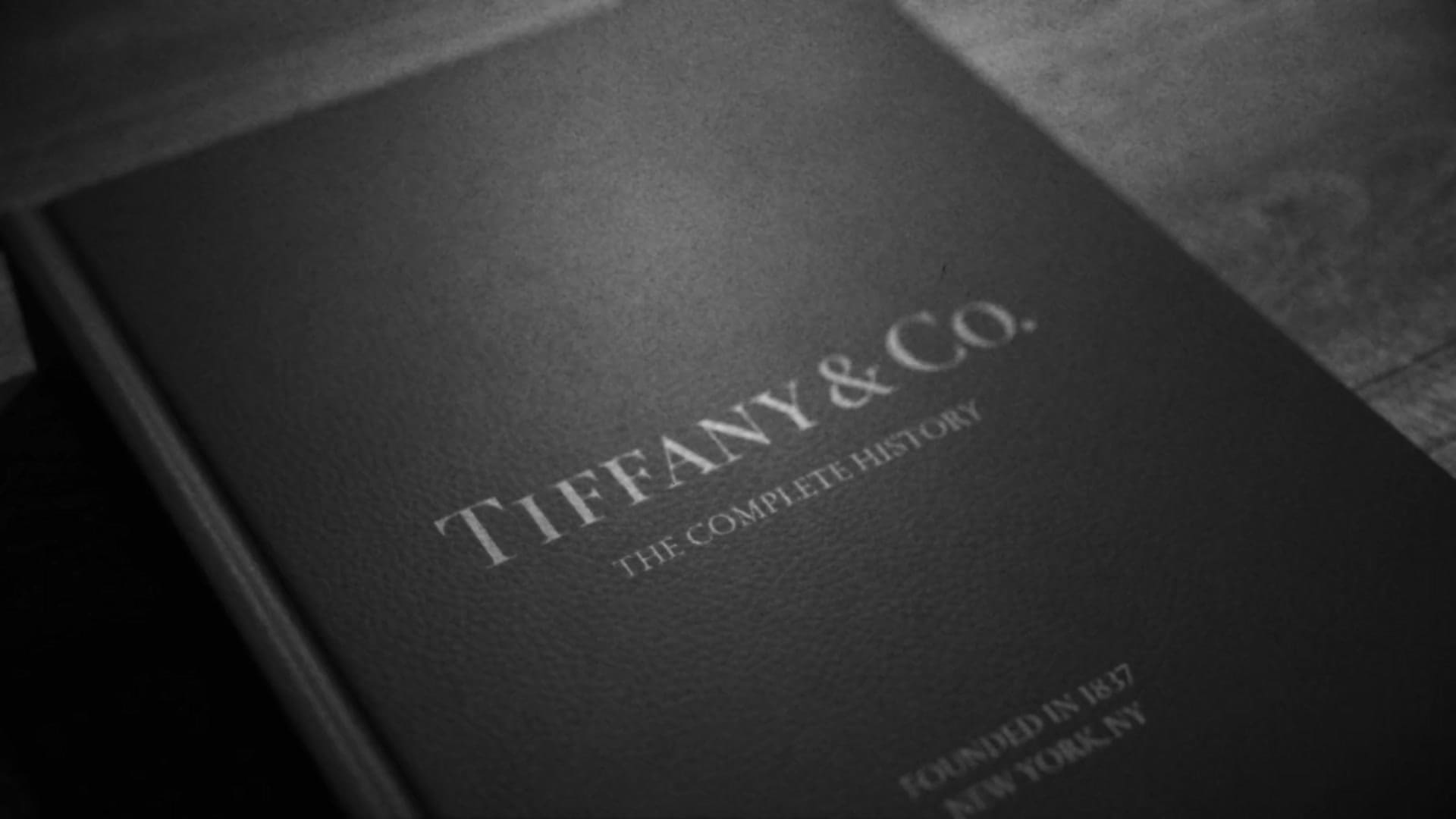
It opens on a book, Tiffany & Co.: The Complete History, and the first century lives in its pages. A sketch of the first store at 259 Broadway. The storefront of Tiffany, Young & Ellis. The 1845 catalogue that became the Blue Book. Shop labels from Paris, London and Geneva, the .925 sterling stamp, the Atlas clock. Each year gets its own page, set in ledger type on sepia stock.


Gilt: the turn of the century
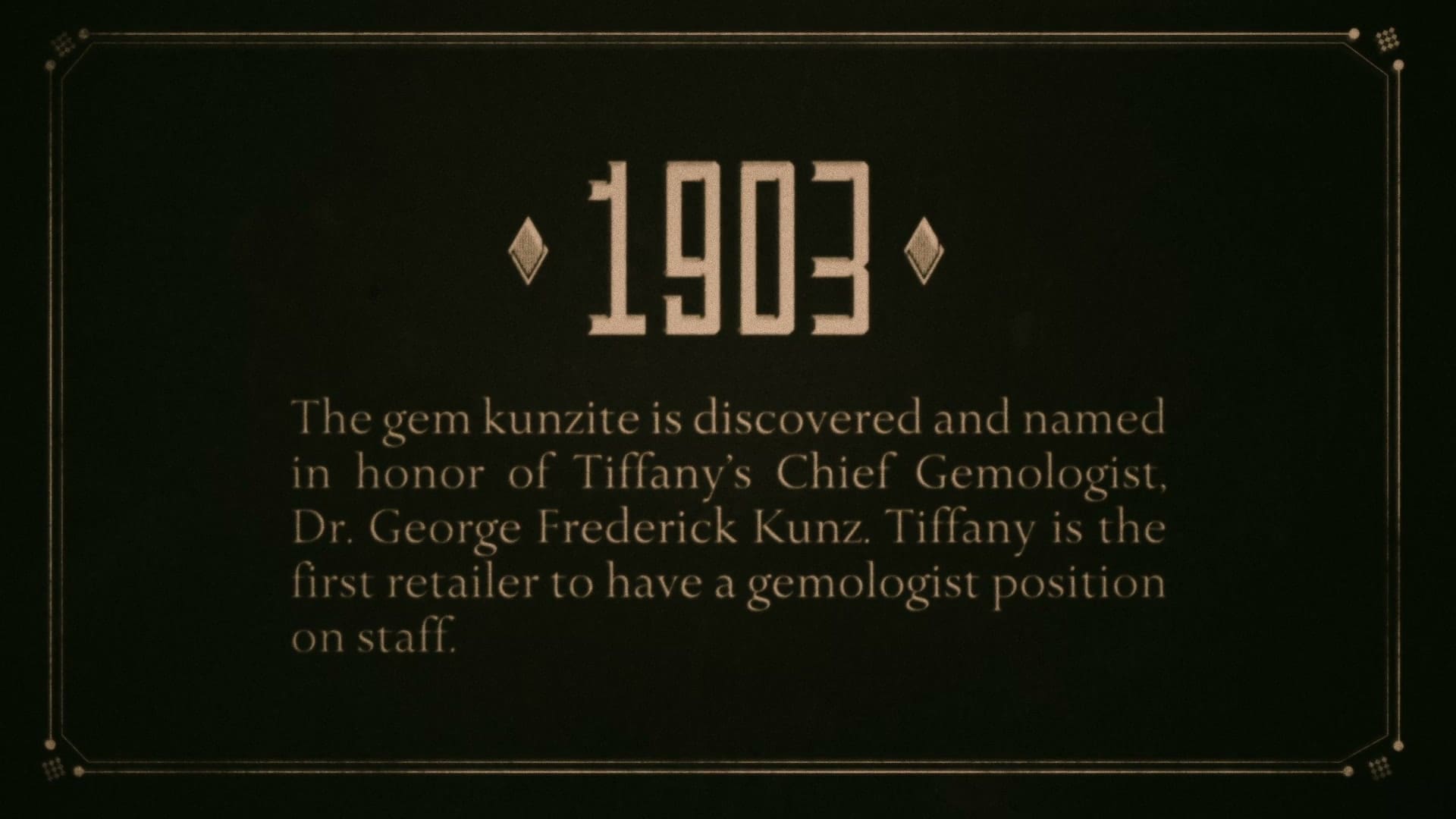
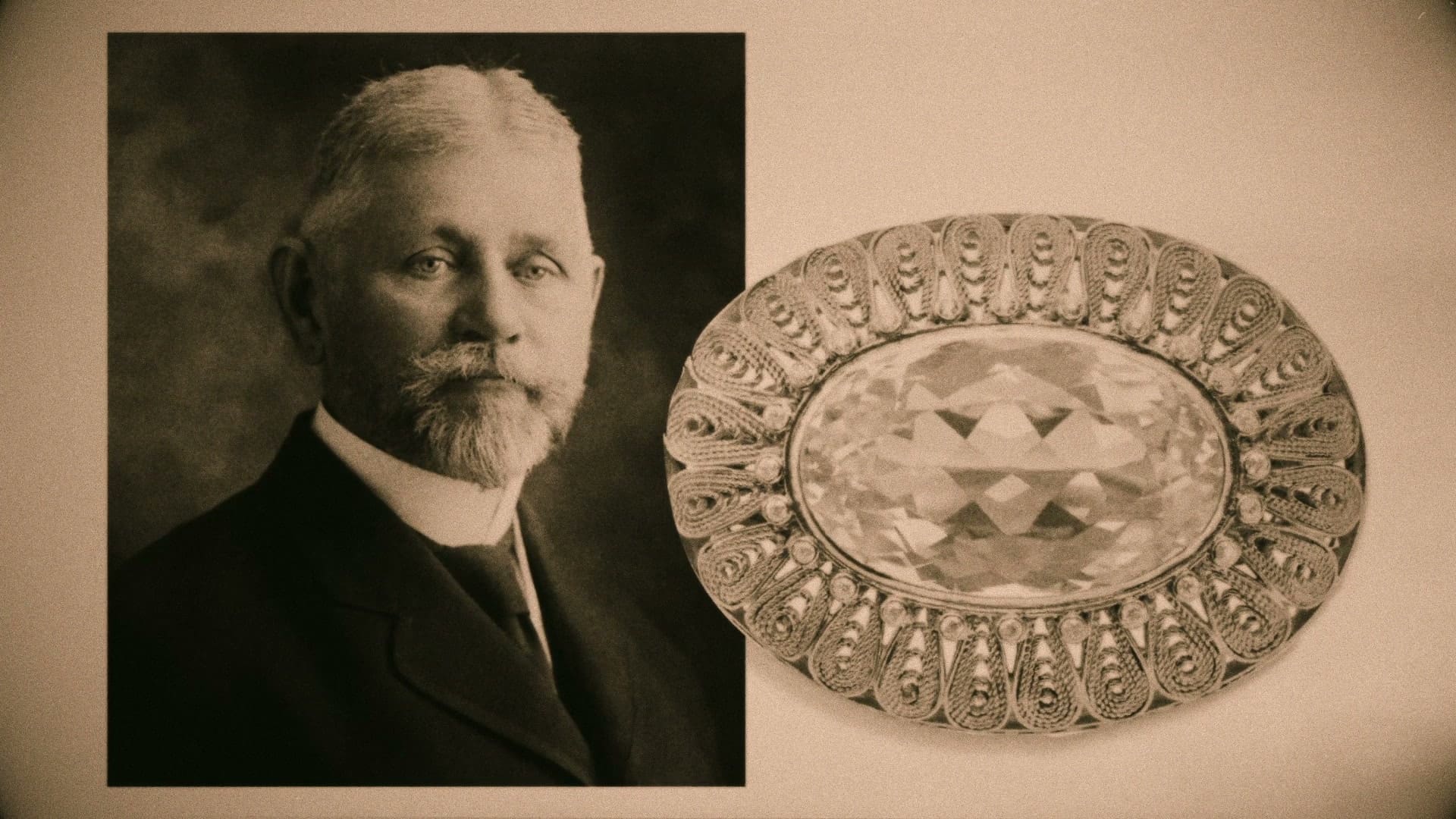
The new century arrives framed in gold. Art deco title cards carry the age of Louis Comfort Tiffany, the company’s first official design director in 1902, and of George Frederick Kunz, the chief gemologist who gave his name to kunzite in 1903 and introduced morganite in 1910.
Silver screen: 1940 to 1961
Then the picture turns to film. The Fifth Avenue flagship opens in 1940 under a newsreel title. Gene Moore and Jean Schlumberger get their screen credits, Starring, the way Hollywood would have billed them: Moore for the windows he turned into tiny theatres, Schlumberger for the jewels he drew at his desk. The chapter ends where everyone expects it to, on 1961.


Tiffany on screen
A house this famous has a second archive, and it lives in film and television. The archive team could give us the jewels, the ledgers and the stores; the screen moments we had to find ourselves. We spent weeks pulling every appearance we could: the scenes, the red carpets, the trophies lifted in confetti, then cutting each one into its decade so it looked like it belonged there.
Holly Golightly and Paul stepping through the revolving doors in Breakfast at Tiffany’s. Marilyn Monroe naming Tiffany in “Diamonds Are a Girl’s Best Friend” in Gentlemen Prefer Blondes. Trey proposing to Charlotte in Sex and the City. Ross and the little blue bag in Friends. The parties of Baz Luhrmann’s The Great Gatsby. Anne Hathaway on the Oscars carpet, and Lady Gaga in Tiffany diamonds. The Vince Lombardi Trophy in the hands of Bill Walsh and Joe Montana, John Elway and Eli Manning. The millennium arriving on the evening news. Beyoncé and Jay-Z in About Love, Elle Fanning at the Fifth Avenue windows, Anya Taylor-Joy, Hailey Bieber and Gal Gadot in the campaigns of the new century.
Colour: Peretti, neon and VHS
Colour comes in loud. Elsa Peretti, the Florentine designer who joined Tiffany in 1974, arrives on a spread of Tiffany red, her sculptural Bean filling the frame. Tsavorite gets a seventies product launch, 1978 glows in neon, and Paloma Picasso, the designer daughter of Pablo Picasso and Françoise Gilot, who joined Tiffany in 1980, arrives on a VHS tape with typewriter captions.


The new century
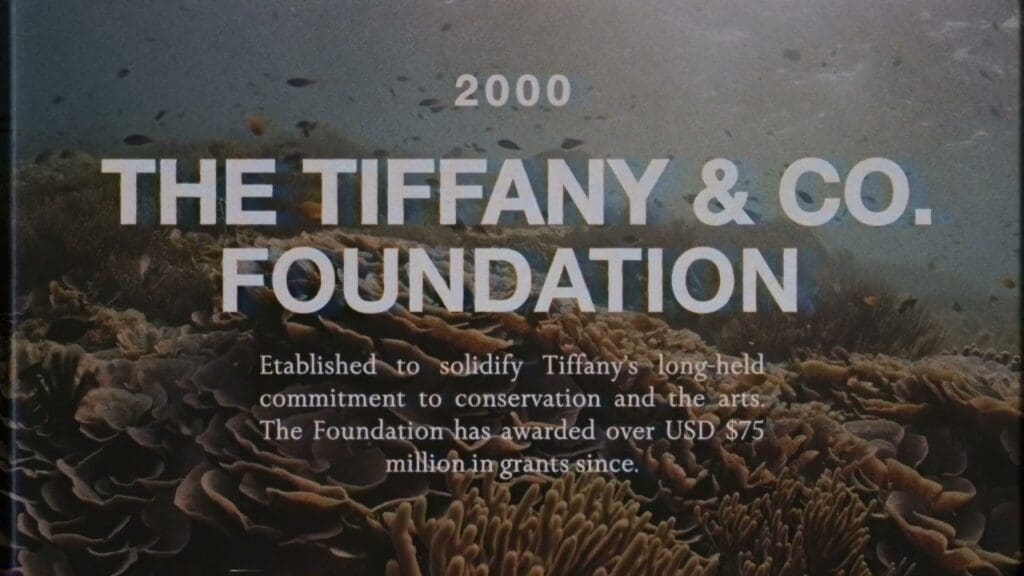
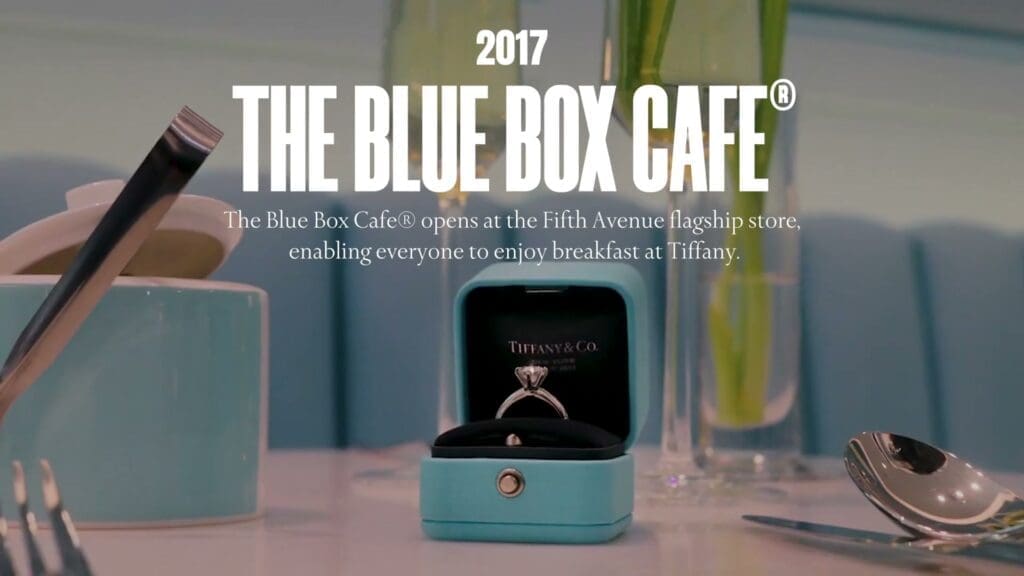
From 2000 the frames sharpen into the clean graphics of now: the Tiffany & Co. Foundation, Pantone’s 1837 Blue, Tiffany Keys, Rubedo, the T collection, the Blue Box Cafe, all the way to 2022.



The second cut
The ten-minute film did what it set out to do: it told the whole story, carefully, in order, era by era. Then Tiffany needed a second version for a new audience, one that would carry the same history with the house’s modern personality up front: shorter, brighter, colourful and joyful, with the energy of the brand today.
So we cut it again. Every fact stayed, and the film came in at under five minutes. Instead of marching through the decades, it moves in chapters named for the things Tiffany stands for, love, individuality, connection, with the full timeline from 1837 to 2022 compressed into a twelve-second sprint at the end.
The love chapter shows the new tempo best: quick and close, ring after ring, hand after hand.
Stills, set in motion
The film also made room for some of the earliest work of our Tiffany collaboration. From the start, much of what the house gave us was still imagery: photographs, product shots, archive scans. We gave it motion, with depth, camera moves and animation, until a photograph played like a shot. A lot of what moves in The Complete History began life as a still.
That is the quiet lesson of this one. If all you have is a folder of photographs, you already have the makings of a sizzle reel.
The history film was one of several we made for Tiffany that year, alongside the 2022 Sizzle, Introducing: Tiffany Lock and the Holiday 2022 Sizzle.
Credits
- Client
- Tiffany & Co.
- Agency
- RIOT
- Edit and motion graphics
- Chris Maguire
- Pop culture research
- Nastassja Simone, Andrew Alberson, Jack Stovin
- Archive research
- Cristina Vignone and Samantha Citarella, Tiffany & Co. Archives
- Project manager, Tiffany & Co.
- Hilaree Hawkins Farha
- Post producer
- Nastassja Simone
ServicesEditing·Motion Graphics·Creative Direction·Branded Content