
The First Part Is the Dreaming: Portrait of Oscar-Winning Costume Designer Kate Hawley
Last night, at the 98th Academy Awards inside the Dolby Theatre in Hollywood, Los Angeles, Kate Hawley won the Oscar for Best Costume Design for Frankenstein. On a night when the film industry paused to celebrate its finest work, Hawley stepped into a moment that felt both monumental and deeply deserved — a recognition of an artist whose worlds are built not just from fabric and silhouette, but from instinct, emotion, and imagination.
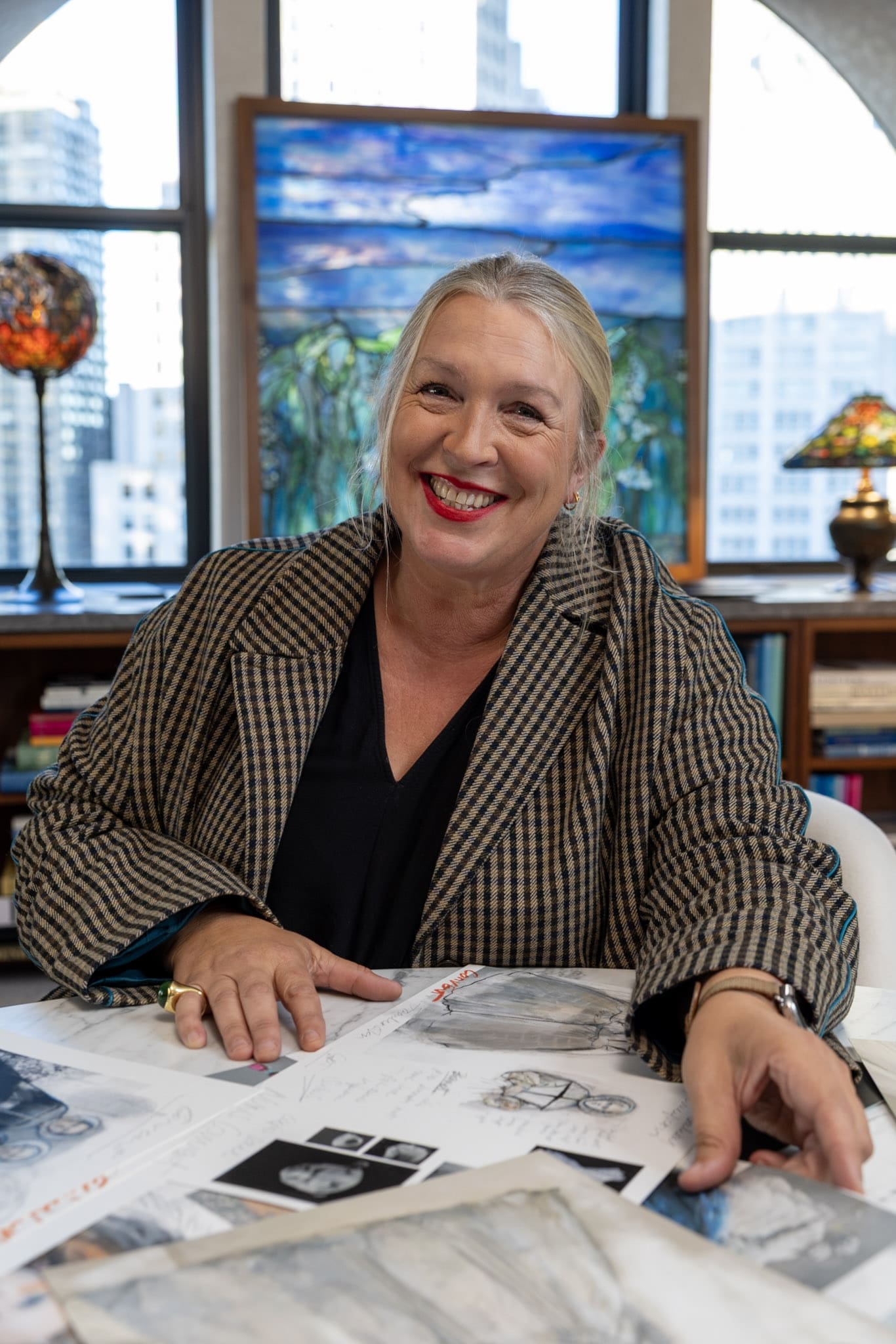
Kate Hawley surrounded by sketches and design references in The First Part Is the Dreaming.
That made the release of The First Part Is the Dreaming feel even more resonant. RIOT’s film was never designed as a conventional behind-the-scenes piece. It was made as an ode to Kate herself — and it arrived just as the rest of the world was finally seeing what her work has been saying all along.
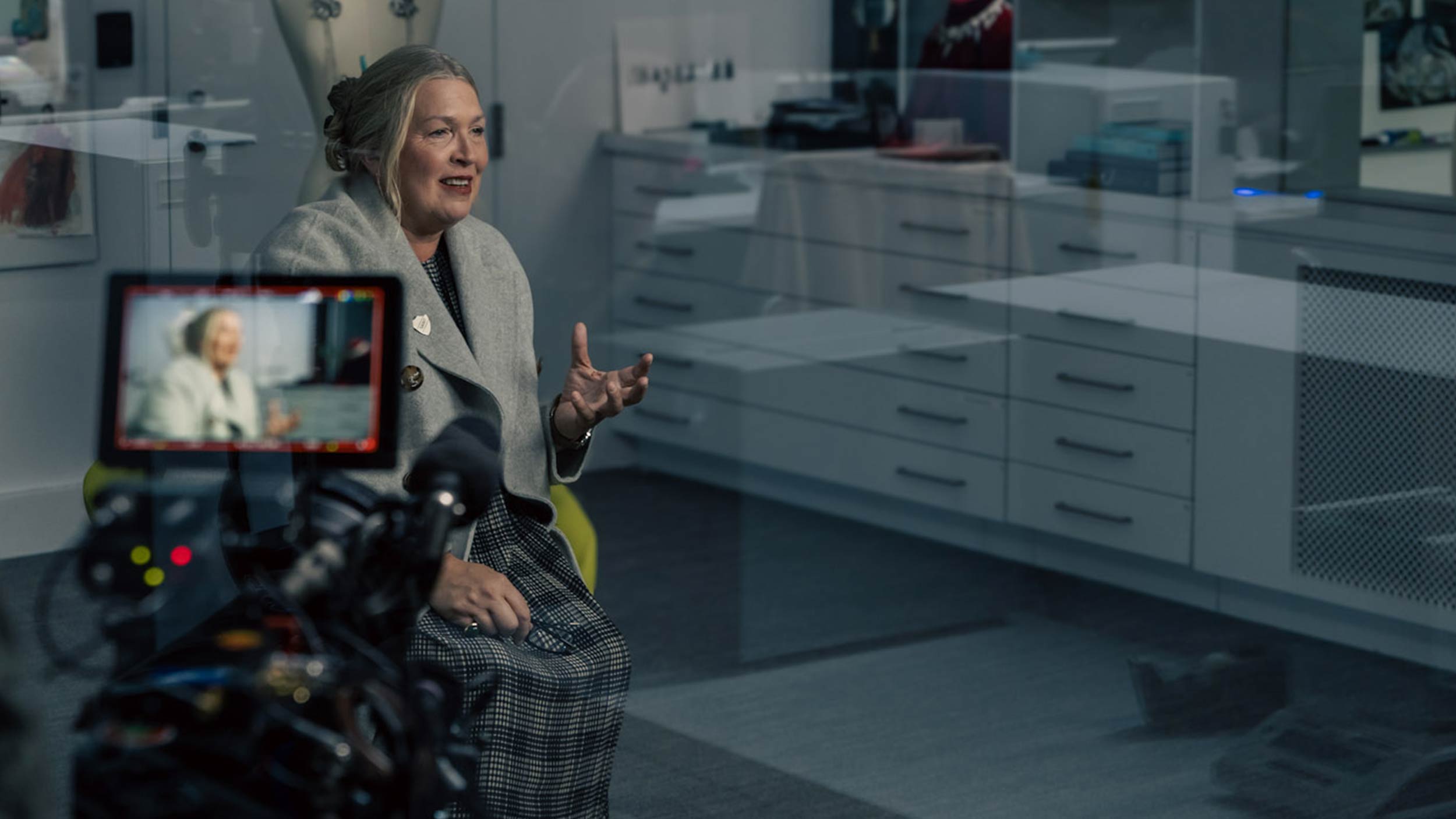
Kate Hawley behind the scenes during the making of Tiffany x Frankenstein — captured by RIOT, where the story of design, craft, and cinema converged under electric light.
Created by RIOT as a short documentary portrait, the film was never intended to be a standard behind-the-scenes recap or an awards-season accessory. It was made as something more personal: an ode to Kate Hawley as an artist. Not just the celebrated costume designer the world sees at the podium, but the woman behind the work — instinctive, vulnerable, emotionally intelligent, and deeply committed to the fragile private act of making.
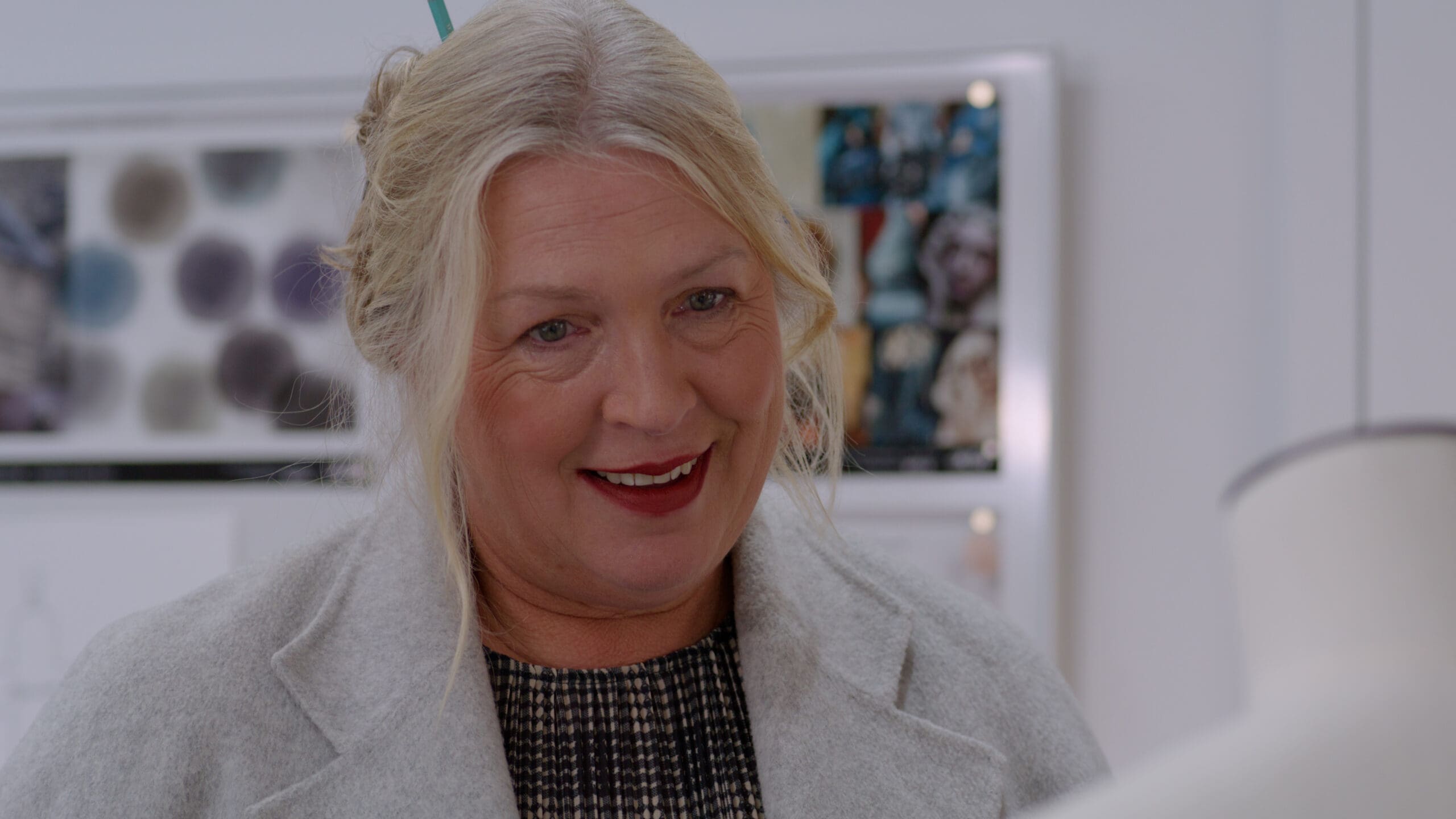
A candid portrait of Kate Hawley during RIOT’s filmed conversation.
The timing gave the film a different kind of gravity. As the industry turned its attention toward Hawley’s work on Frankenstein, we wanted to turn our attention inward. Toward the dreaming. Toward the private space before the work is seen. Toward the human being beneath the accolades.
That idea came directly from Kate herself. In the material we shaped the film around, she speaks about the importance of time, silence, and trust in the creative process — the need to sit with a script without noise or interruption and allowing meaning to emerge. That philosophy became the title, and ultimately the soul of the piece: the first part is the dreaming.
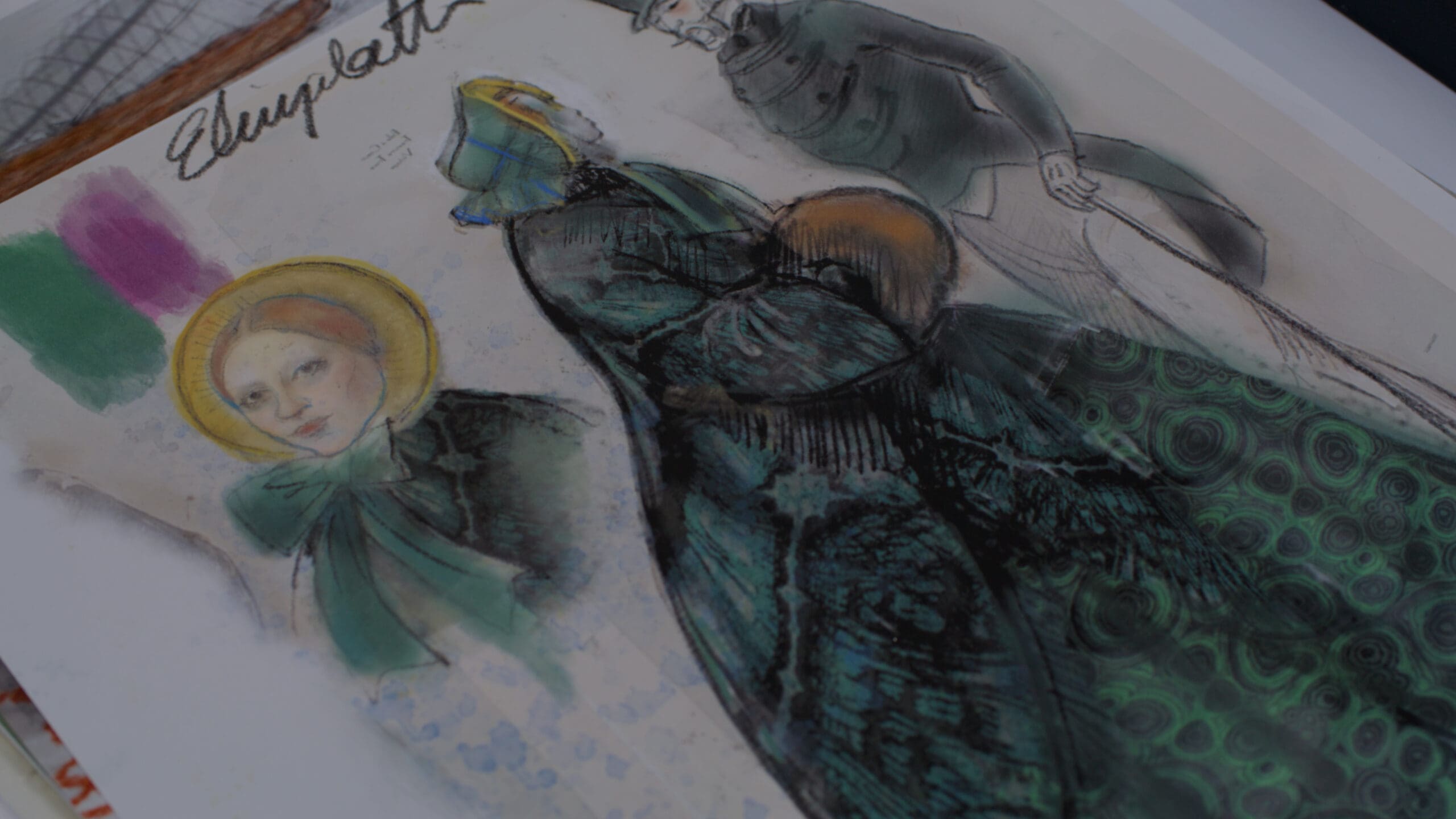
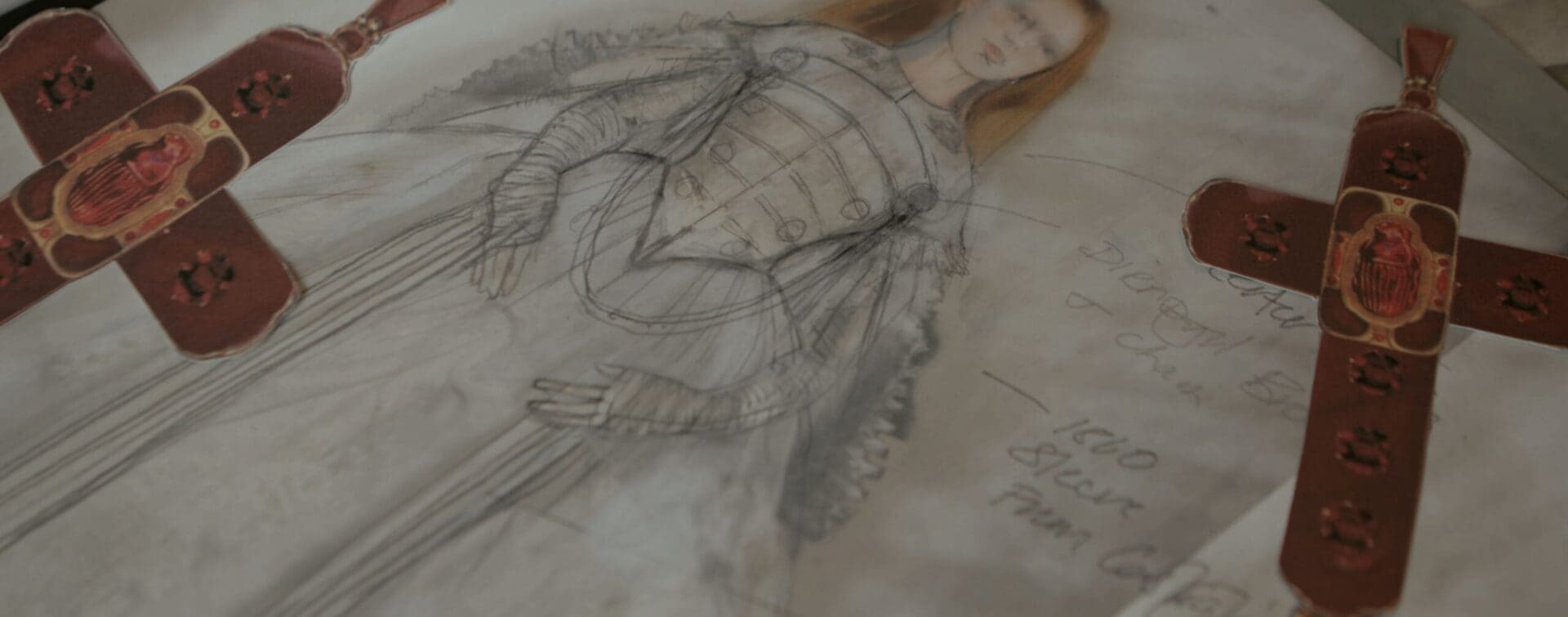
A costume design sketch detail featured in The First Part Is the Dreaming.
From there, the portrait opened wider. Kate spoke about growing up in a world of the darkest fairy tales, about having an opera singer for a father, and about how the “heightened world” was always there. She described Guillermo del Toro responding not just to her experience, but to her books, her theatre background, and the shared creative language between them.
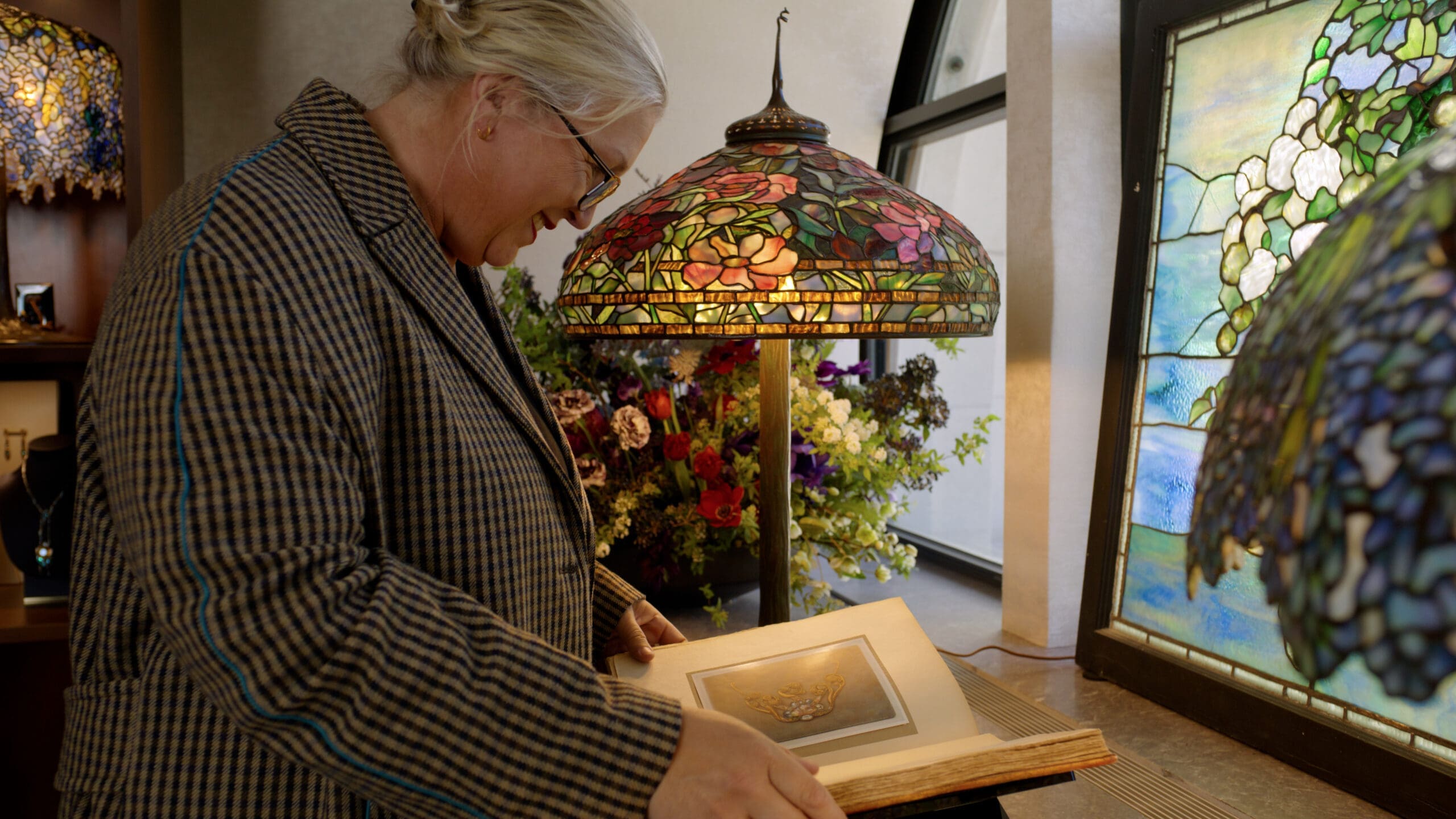
Kate Hawley surrounded by reference material, Tiffany lamps, and stained glass during the making of The First Part Is the Dreaming.
That language became one of the key ideas in the film. Not just visual language, but the deeper emotional language between artists — the kind built on instinct, trust, and mutual recognition. Kate describes the beginning of collaboration as something vulnerable, almost like revealing yourself before you know how your work will be received. That truth became one of the emotional anchors of the piece, because every artist knows that moment: the first offering, the first risk, the first time you let someone else see what you see.
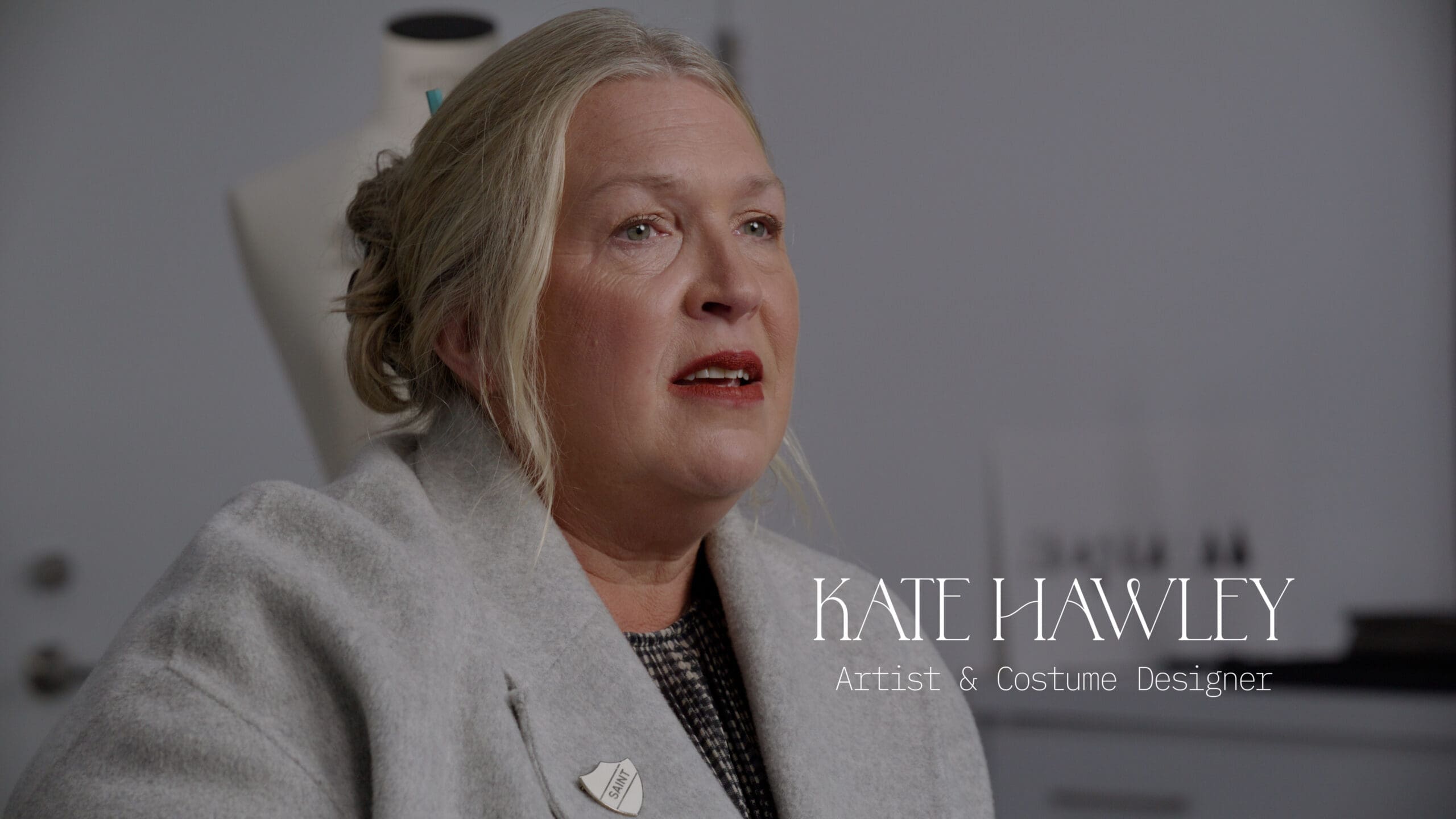
Kate Hawley in RIOT’s portrait film The First Part Is the Dreaming.
We also found a powerful mirror in Kate’s reflections on Mary Shelley. What emerged from her reading of Frankenstein was not just aesthetic inspiration, but an emotional recognition: pain, loneliness, and the image of a young woman artist finding a way to voice herself among huge male personalities. That thread gave the portrait a deeper current and helped shape the film into something larger than a project profile. It became, in part, a film about women in art, authorship, and the persistence required to protect your own voice.
Visually and editorially, RIOT approached the piece like a small art film rather than a promo asset. The goal was not to explain Frankenstein, but to evoke the interior life of the artist helping shape its world. To make something textured, intimate, and emotionally precise. Something that felt worthy of Kate, and worthy of the ideas she shared with us.
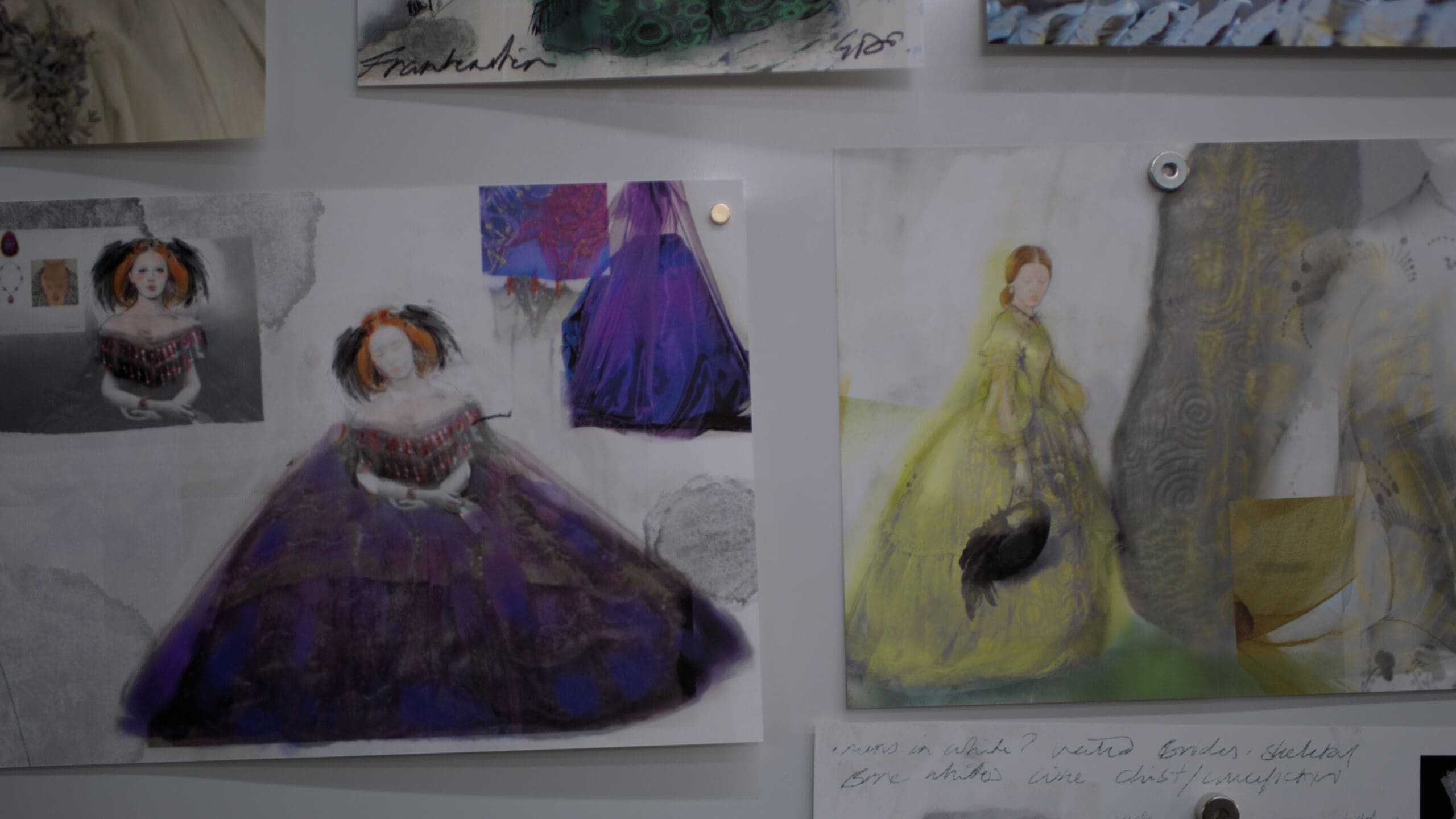
Character and costume development artwork from Kate Hawley’s visual process.
Now, with Hawley’s Oscar win, the film carries an added resonance. It exists as both a portrait of a singular artist and a record of something the wider culture was only just beginning to fully celebrate.
The First Part Is the Dreaming was made for Kate, and for the artists who still dream.
The closing dedication from The First Part Is the Dreaming.