
When MTV stopped playing music, we didn’t
There was a time when the screen hummed. A low static. A pulse. That unmistakable blue accents of the Music Television logo, glowing like a portal in a dark room. You didn’t scroll. You waited and that waiting mattered.
At the end of 2025, MTV quietly shut down its final music-only channels. No spectacle. No farewell montage. Just the silent conclusion of an era that once taught the world how to experience music. Not consumption. Not skimming through while also looking at your phone. Actually watching it.
This article is a post-mortem on what we lost. And why we continue to build the alternative.
Music videos became culture
In its prime, MTV wasn’t a content provider. It was a curator. Music videos weren’t filler between ads. They were the main event. A four-minute film could define a generation’s fashion, politics, and posture. You didn’t just hear a song. You entered its world.
Late at night, when the mainstream went quiet, there was 120 Minutes. A slow-burn education in the strange, the abrasive, and the beautiful. No optimisation. No A/B testing. Just taste. MTV didn’t show you what you already liked. It showed you what you didn’t know you needed. That distinction is everything.
The feed replaced the channel
Then the boardrooms arrived. Music slowly gave way to formats that scaled better. Reality TV. Replicable drama. Programming designed not to challenge taste, but to flatten it. Decisions moved away from the people who lived and breathed music and toward those who read spreadsheets.
What replaced the channel wasn’t another curator. It was the Feed. An infinite mall. Endless storefronts, perfectly personalised, quietly exhausting. It gives you more of what you chose yesterday and is familiarity disguised as choice.
A channel, by contrast, is a private gallery. Someone decided this belonged next to that. Someone took responsibility for the sequence, the mood, the story. The feed optimizes for retention. The other invites discovery.
The real cost of the Feed isn’t speed. It’s context.
What the algorithm took with it
On a data-driven platform, a music video is a datapoint. If a video opens with a three-minute cinematic intro or unfolds as an experimental slow burn, the algorithm flags it as a failure. It sees “drop-off” where a human sees atmosphere.
When an eight-minute opus is followed by a fifteen-second trending clip because of audience overlap, the work is stripped of its dignity. No narrative survives that.
For the artist, this shift carries a quieter cost. The Feed turns a labour of love into a performance against metrics — watch time, engagement curves, retention graphs. A music video stops being an act of expression and becomes another obligation on the content treadmill.
On a curated channel, the work regains its dignity. It is allowed to exist on its own terms. That gap between the datapoint and the story is where culture either survives or disappears.
2004: the wild west, not the glory days
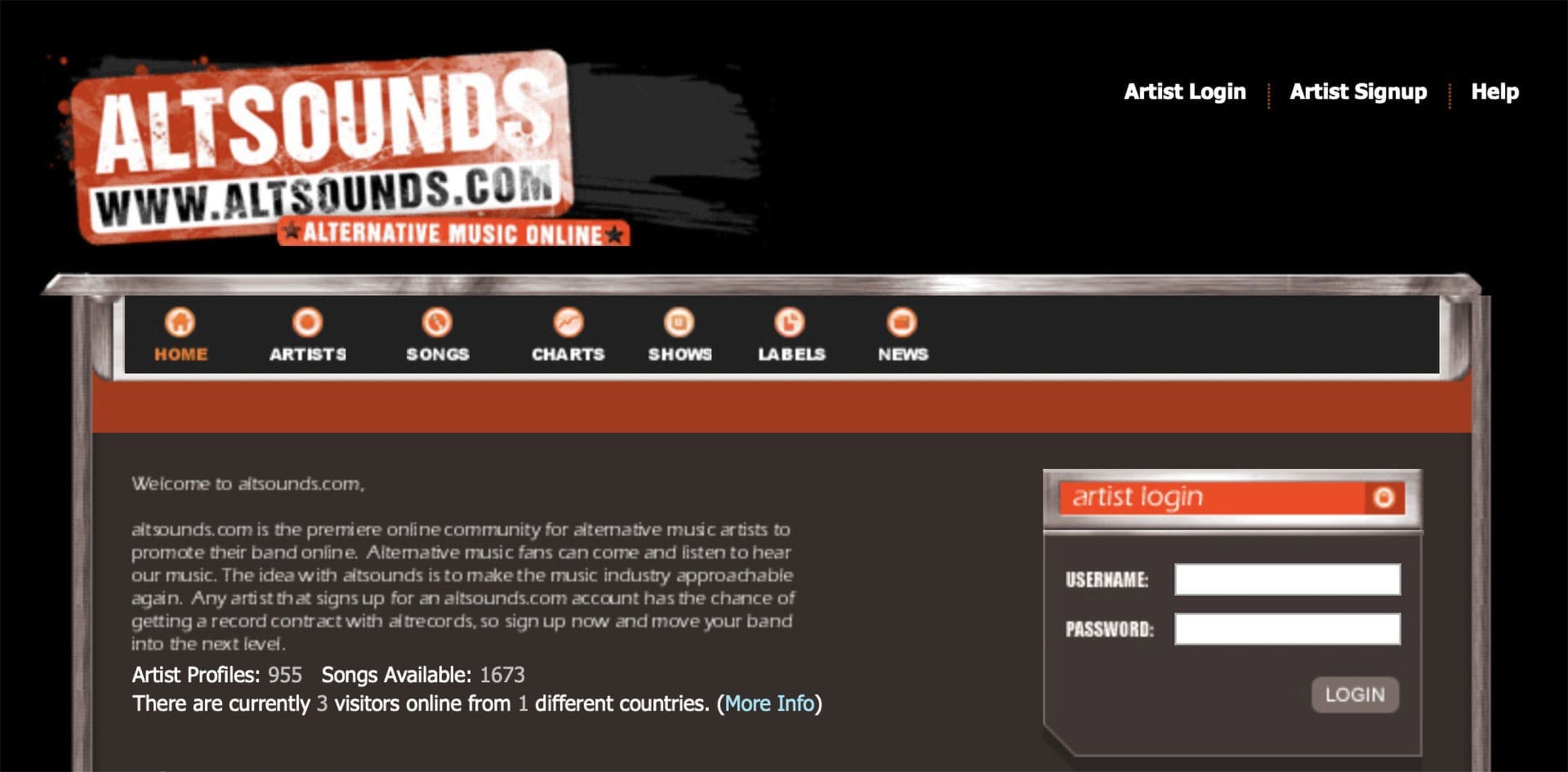
A screen grab of AltSounds from 2004 courtesy of Wayback Machine
AltSounds didn’t begin as a response to MTV’s collapse. It started earlier. When the fractures were already visible. Founded in 2004 in Washington D.C., AltSounds emerged during the digital wild west. Burned CDs and file-sharing forums. Half-finished websites held together by borrowed code. Artists uploading work without permission, polish, or plan. Myspace pages blinked while blogs multiplied overnight.
It wasn’t romantic. It was loud. The blog era promised access, but it also created a new kind of noise. Endless posts. Endless hype cycles. Too many words chasing too little attention. Writing replaced watching. Commentary eclipsed craft.
AltSounds lived inside that chaos. And learned from it. The realisation came slowly, then all at once: the problem wasn’t discovery. It was dilution. While the internet accelerated, the art itself was getting lost. Especially the music video — the most expensive, ambitious, and vulnerable expression an artist could make.
AltSounds didn’t just evolve with the industry. It distilled itself against it. Less commentary. More signal. The blog wasn’t the endgame. The channel was.
AltSounds TV: the return of watching
AltSounds TV was built on a simple belief.
Music videos still deserve attention.
Not thumbnails.
Not autoplay fragments.
Attention.
The modern internet confuses search with discovery. Search assumes you already know what you want. Discovery begins where certainty ends. You don’t enter a gallery to find a specific work you’ve already seen online. You go to be surprised.
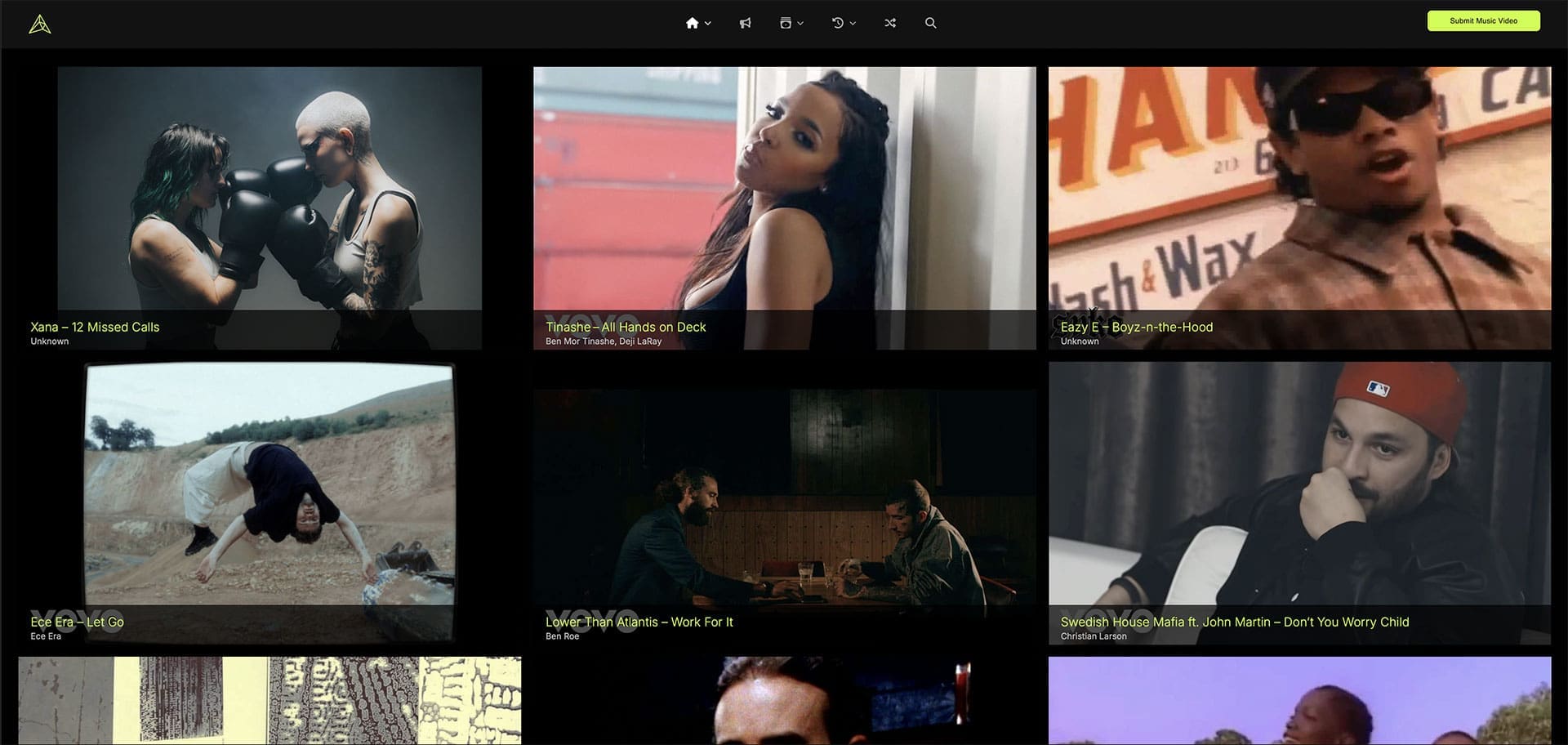
AltSounds TV 2026: Discovery page to help people find new music videos they might not know they wanted.
The curation isn’t handled by a black box in a server farm. It’s shaped by a small, obsessive collective split between New York City, Kentucky and Amsterdam — people who grew up in venues and independent record stores, who still believe sequencing and taste matters. We’ve revived the ritual of watching. Discovery guided by human taste, not machine prediction.
AltSounds is still on.
Always has been.
Behind it sits a digital Library of Alexandria for music. Over 120,000 official music videos, spanning decades of sound and image — from grainy 16mm experiments to high-gloss CGI futures.
- AltSounds.TV is where you watch.
- AltSounds.COM is culture captured.
Design as a cultural signal
This is where RIOT enters — not as a vendor, but as a believer.
We don’t see design as decoration. We see it as architecture — the vessel that tells an audience: this matters. That belief is shaped by the same international orbit AltSounds lives in, where culture travels faster than consensus and independence still matters.
AltSounds TV is a system that treats a four-minute music video with the same respect as a 35mm feature film.
Spacing. Tempo. Restraint.
The interface is negative space — the silence between the notes. Where most platforms scream for attention, AltSounds whispers, so the music can shout.
Design isn’t just how something looks.
It’s how you signal value.
When a platform feels intentional, the audience behaves intentionally.
They watch. They listen. They stay.
MTV is dead. Long live AltSounds TV
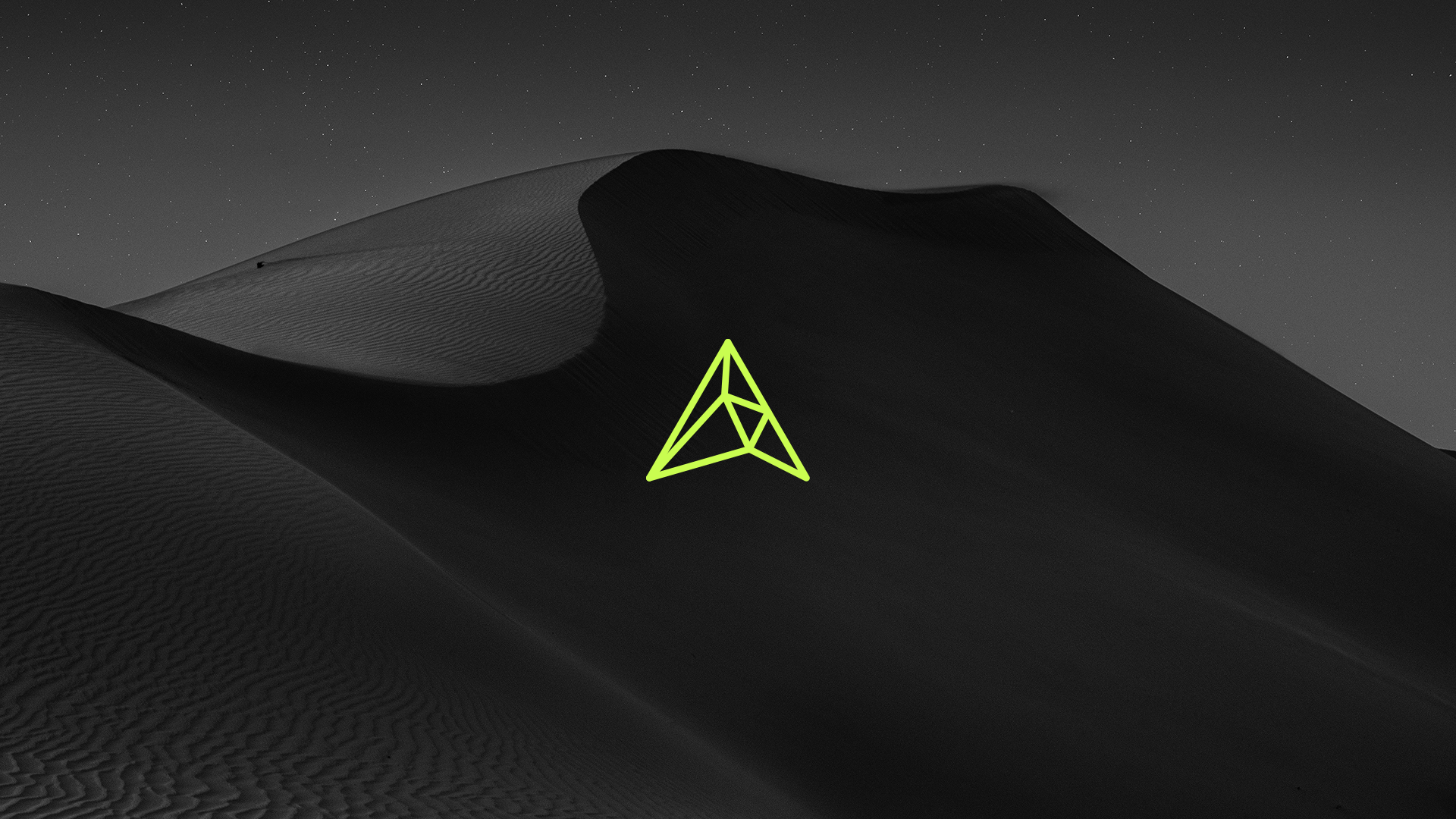
The new AltSounds TV logo and visual identity, designed by RIOT for 2024, bringing a striking neon aesthetic and refined brand storytelling to the world of music video streaming.
MTV stepping away from music television doesn’t mean the form is dead.
It means the responsibility has shifted.
From corporations to communities.
From feeds to channels.
From optimisation to intention.
Music videos didn’t disappear.
They became independent again.
And for those who still believe that discovery should feel human, that context is culture, and that a music video is more than just content.
AltSounds TV is still on and always will be.