

The Attention Crash: Why Content Is Getting Louder, Dumber, and Harder to Love
Content used to feel like discovery. Now it feels like survival. The attention crash has turned content from discovery into survival. We live in a world where every frame, clip, idea and fragment is competing for the same sliver of attention you protect like oxygen. And the platforms are not neutral. They are pushing, pulling, whispering, and shouting over your shoulder with one relentless request:
Stay. Do not look away. Keep watching. Bring friends. Bring revenue. Growth for the sake of growth.
But here is the twist. Staying does not mean you are actually paying attention. And that distinction, the distance between time spent and impact made, is quietly reshaping culture, creativity, and the way brands show up in the world. Welcome to the attention crash. We are all in it whether we admit it or not.
The Algorithm Does Not Want Your Brain It Wants Your Pulse
The platform economy loves to pretend it is measuring value. In reality, it is measuring survival instinct. If you stop for half a second because something startled you, confused you, or simply interrupted your doom-scroll, the machine records one thing: You stayed. That is all it needs.
But when content is judged solely on how long a pair of eyes remains pointed toward it, we begin to erase the entire spectrum of human attention. Passive seeing. Active watching. Emotional resonance. Intellectual processing. Deep engagement. All flattened into a single numerical metric.

Image credit: Erik Mclean @introspectivedsgn
This is how hyperstimulating, hollow content gets rewarded, while work that actually moves people gets smothered under the weight of a retention graph. We are crafting for a system that cannot tell the difference between someone thinking and someone simply not looking away yet. That reality should unsettle anyone who cares about creative work.
Why “Engaging Content” Is a Myth
The industry still repeats the same advice: make more engaging content. The platform reward system is no longer interested in engagement. It worships retention at any cost. Clarity becomes optional. Depth becomes risky. Nuance becomes dangerous. Silence is unacceptable. Breathing room is a liability. Zero is impossible.
In a world drowning in content designed for everyone, the strongest move a brand can make is to create something unmistakably made for someone.
The more complex your message, the more off-ramps you create for the viewer to leave. The algorithm punishes that complexity. It buries it. It hides it behind louder and simpler alternatives.
So brands adapt. They compress. They flatten. They simplify until nothing sharp remains. Nuance is shaved down. Context is removed. Ideas are diced into tiny, frictionless bites that will not threaten the retention curve.
This is how culture loses its texture. How audiences lose their appetite for challenge. How the world fills up with content engineered to keep us numb rather than content designed to make us feel alive.
Growth at All Costs Is Culture at No Cost
The attention crash is not a creative problem. It is an economic one. Platforms need bigger numbers every quarter. Not good numbers. Not meaningful numbers. Only bigger. More minutes watched. More ads served. More attention extracted.

Image credit: @mishalibrahim
So the creative industry contorts itself around whatever rewards the machine offers. Soon the systems we create in become the systems we create for. And artists, brands, agencies, and strategists twist their instincts around a metric that cannot differentiate soul from noise.
The machine is not evil. It is mechanical. It is doing exactly what it was built to do. We are the ones bending ourselves to fit its shape.
Endless growth is a requirement, not a preference.
The Only Real Rebellion Is Opting Out
Platforms will not fix this. They cannot. Endless growth is a requirement, not a preference. But creators and brands have something platforms do not: the ability to say enough. Enough hollow dopamine loops. Enough designing for the lowest common denominator. Enough hacking psychological reflexes under the banner of “content performance”.
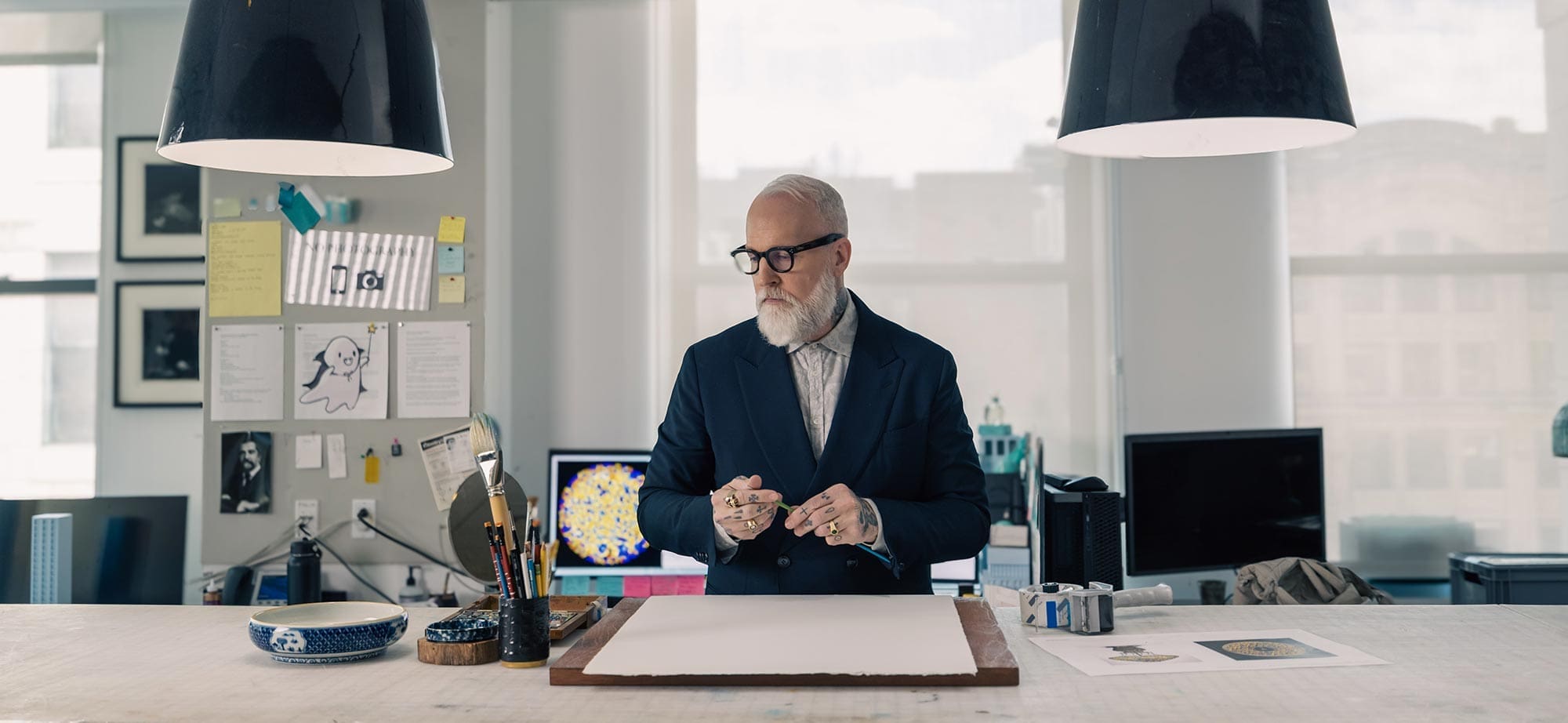
The calm before creation — Christopher Young prepares to translate ideas into form. Photo by Adrian Nina.
You can choose to make work that has edges again. Work that has a pulse. Work that respects the audience instead of exploiting their attention. Yes, you might reach fewer people sometimes. But you will reach the right people. And that is what builds culture, not just numbers. In a world drowning in content designed for everyone, the strongest move a brand can make is to create something unmistakably made for someone.
What This Means for Brands in 2026 and Beyond
The next era of brand communication will belong to the intentional. Not the most available.
It will belong to brands that:
-
value real attention rather than addiction
-
produce content with emotional resonance instead of empty reach
-
build communities instead of passive audiences
-
craft for cognition rather than exploitation
-
create invitations instead of interruptions
-
choose depth instead of ubiquity
Audiences can feel the difference between work that was crafted and work that was optimised. One nourishes. The other numbs. We are all starving for the real.
So Where Do We Go From Here?
We endure. We make the work that has teeth. We let craft lead instead of fear. We create content that cannot be reduced to a three-second hook. We keep the human part alive even when the machines do not reward it. The pendulum will swing back. It always does.
Until then, we create with intention. We create with conviction. We create with humanity. And we enjoy the process because if content is going to flood the world, the least we can do is make sure the good stuff floats. Ready to make something truly special? If not now, when?