Would You Paint Over a Basquiat?

RIOT’s pixel Piranha Plant — nostalgia rooted in real soil.
In our studio, there’s a small plastic Piranha Plant. The kind that used to pop out of green pipes in Super Mario Bros. But this one’s different — it sits in a real ceramic pot, planted in real dirt. It looks like it could come to life, and you could sneak down it into a secret level if you choose and maybe, just maybe find some hidden secrets.
I bought it back in 2010 from this weird little shop in the Lower East Side, on the corner of Hester and Essex — a place that sold hacked consoles, imported Japanese figurines, dusty NES cartridges… and Bitcoin. A cultural glitch hidden in plain sight. And I didn’t buy any. I bought the plastic plant. I bought nostalgia. Something tactile. Something that reminded me of the purity of childhood, before wallets and ledgers and forks and fear. Before the code got updated.
This plant still sits in my office. It’s a reminder — not of what I missed, but of what I chose. The thing that didn’t need to change. That didn’t need a patch. That just was.
This journal isn’t really about Bitcoin. It’s about permanence. About art. About code. About whether we still know how to leave something the f*ck alone when it’s great. That’s what we explore every day at RIOT.
Would You Paint Over a Basquiat?
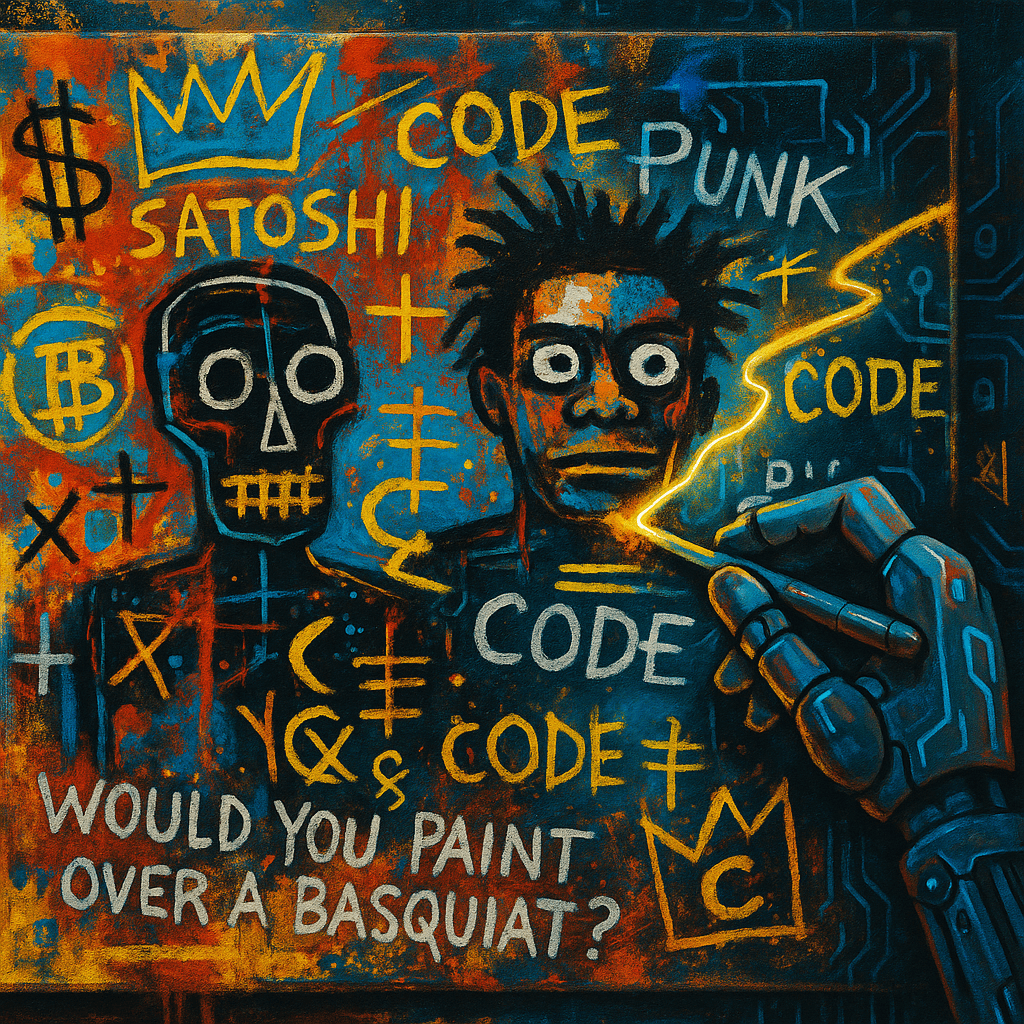
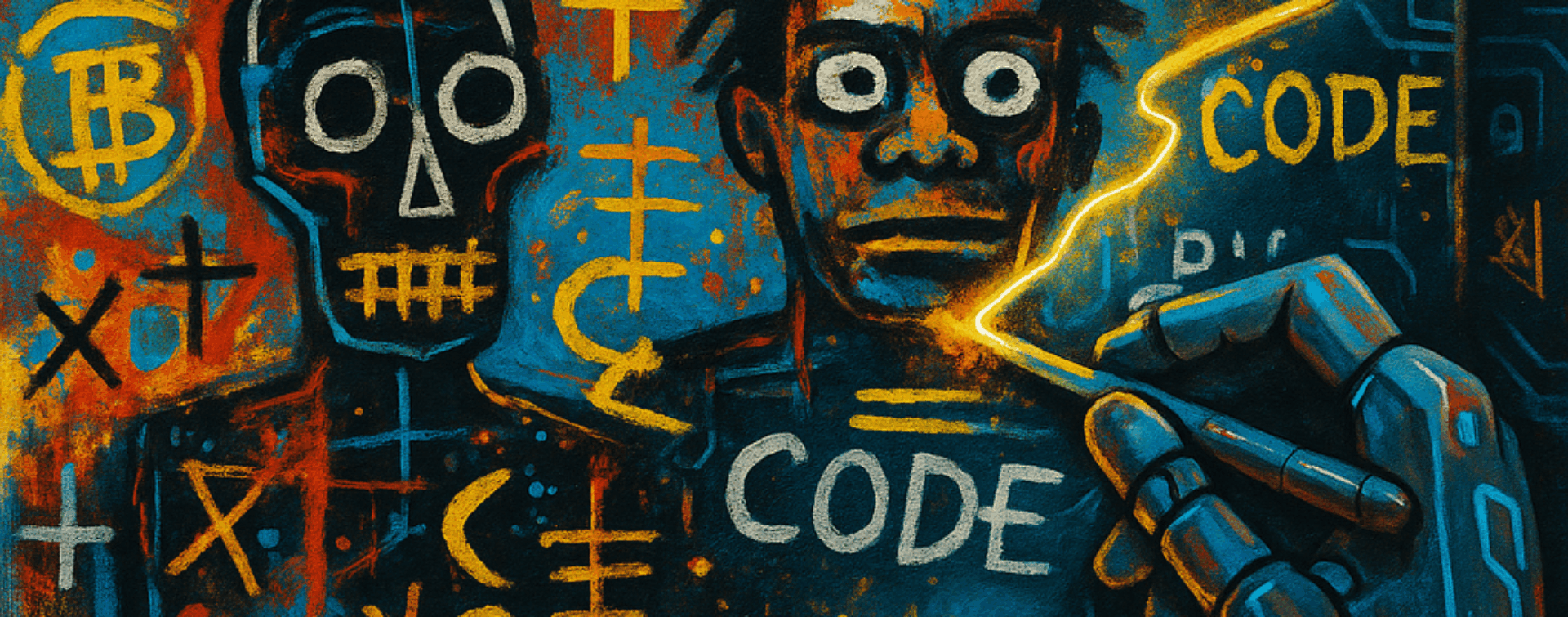
An AI homage to Basquiat — proof that even masterpieces can be overwritten when the brush paints itself.
Imagine this.
You walk into a gallery and see a Basquiat — raw, loud, finished. Everything is exactly where it’s supposed to be. The chaos, calculated. The emotion, locked in place, forever. And then some panel of “experts” strolls in and starts discussing whether maybe, just maybe, they should add a new figure to the canvas to make it “better.” You know, to improve the visual aesthetic. To make it more dynamic. To optimize it.
That’s what Bitcoin feels like now.
Taproot was a deliberate decision — years of discussion, thousands of nodes, a slow drip of consensus. And yet, to those of us who saw Bitcoin as a finished work — a perfect stroke of punk logic against the bloated canvas of modern finance — it felt like someone had picked up a brush and started painting over Satoshi.
Taproot wasn’t just a technical fork. It was a philosophical one. It introduced privacy enhancements, yes. Efficiency gains, yes. But also a quiet bending of the knee to whales. It made complex, high-volume transactions harder to see. It created shelter for size. And in doing so, it shifted the soul of Bitcoin from being radical transparency to selective opacity.
That’s not punk. It’s privilege wrapped in code.
Maybe it’s “progress.” Maybe it’s the nature of software: to be iterated, forked, versioned, improved. But what if some software isn’t software anymore? What if code is art?
Would you paint over a Basquiat?
Some Code Should Be Sacred
We live in an era addicted to updates. Patch it. Improve it. Ship faster. Iterate more. Break it, then fix it, then break it again — just to prove you’re doing something.
But not everything is broken. Not everything needs fixing. Some things — the real things — are good just as they are and aren’t meant to be touched.
Satoshi’s original Bitcoin code was math, philosophy, and punk. It was a bulletproof middle finger to central banks, gatekeepers, institutions, and the idea that you needed permission to own your value. It had a hard cap. A brutal elegance. It did what it said, and said what it meant.
When you start to touch that — even with good intentions — you introduce the possibility that the original meaning wasn’t enough. That you know better. That maybe Satoshi’s code was just a first draft, not the final masterpiece.
But not everything is a product. Some things are proclamations. Some things are sculptures in zeroes and ones. And when something works as intended — beautifully, radically — changing it isn’t progress. It’s dilution.
Bitcoin doesn’t need to be more efficient or improved. It needs to be untouchable. Like a gold bar sealed in glass. It doesn’t evolve. It doesn’t get optimized. It doesn’t have new features in future updates. It just is. You don’t try to improve gold. You preserve it and hold it, as it is and always will be.
When you buy into something that can be retroactively changed, you don’t really own it. You’re just renting a vibe until the next version ships. And that’s not what the original Bitcoin whitepaper and code promised.
You Can’t Patch a Memory
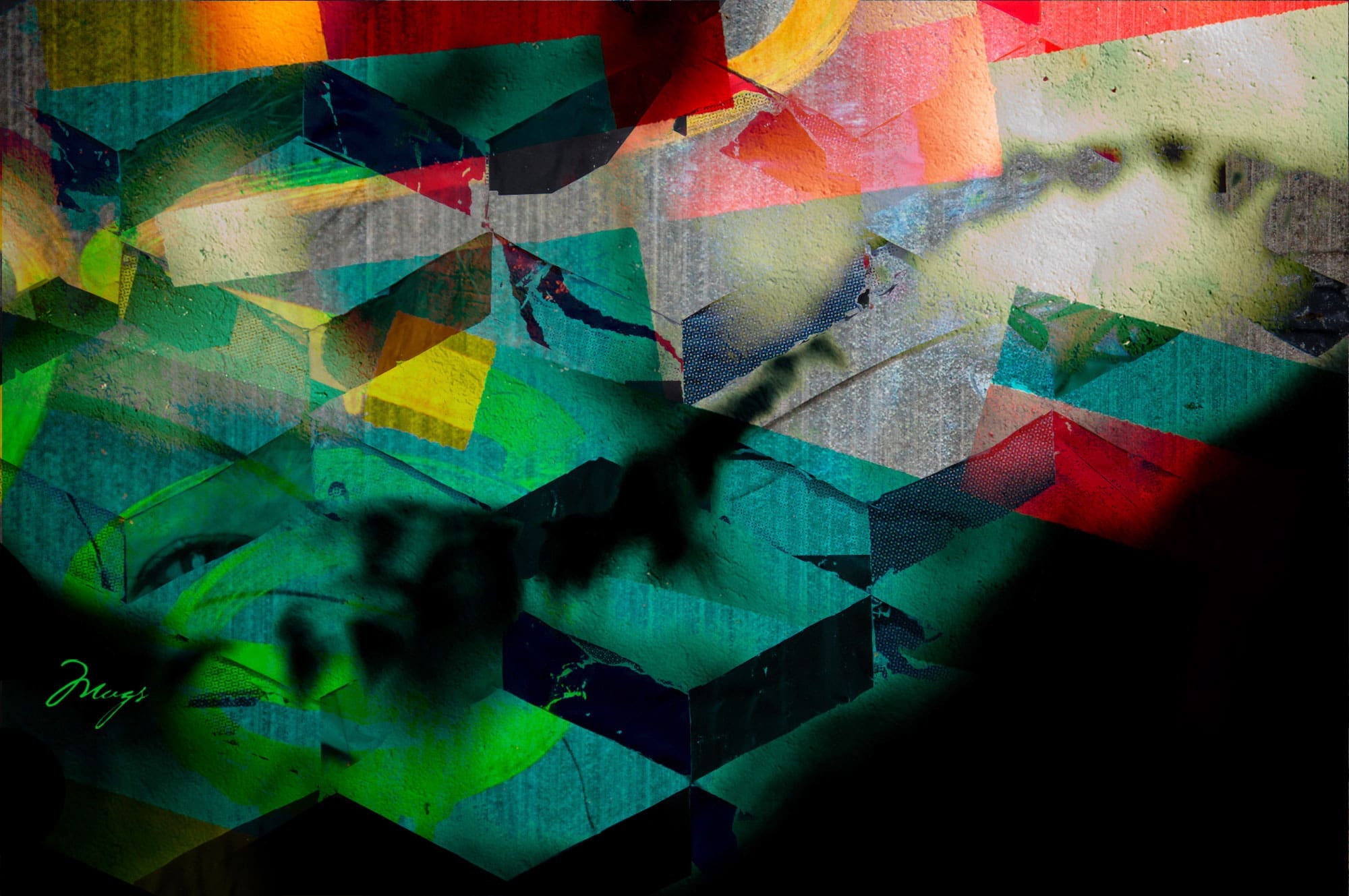
“Parade Circus” — an original artwork by MUG5, created as a visual echo of Massive Attack’s song. A reminder that memory can’t be patched.
I wrote this somewhere over the Atlantic, thirty thousand feet above the ground, held aloft by physics, faith, and a metal shell. The fact that I was able to type these words here — beaming ideas through invisible networks — is staggering. But it’s also a reminder: some things evolve. And some things shouldn’t.
We’ve convinced ourselves that everything in life — even the things we worship — is just another software update away from perfection. That we can optimize meaning. Patch history. Debug culture. As if you could tweak the brushstrokes on a Basquiat to make it “better.” But memory doesn’t get patches. Art doesn’t get version numbers. You can’t fork a feeling.
Bitcoin was once like that. Untouchable. A declaration carved in math. A radical piece of digital art that refused to bend. It was punk because it was finished. Because it didn’t give a f*ck what the world thought it should become. And yet here we are, patching it anyway. Taproot, Ordinals, Layer-2s — each change justified in the name of progress, privacy, scale. But every tweak, every improvement, chips away at the original sculpture. It rewrites the story that this was immutable. Sacred. Final.
That’s why blind faith in Bitcoin — or in any code — is dangerous. It’s written by humans. And humans, eventually, will want to paint over anything, no matter how perfect. The longer something lives, the more hands reach for the brush. We tell ourselves it’s evolution. But sometimes it’s corruption. Sometimes it’s greed. Sometimes it’s just boredom.
Bitcoin’s genius wasn’t just in the code. It was in the defiance to leave it alone. To disappear. Because the minute you start believing that code is beyond question — that it’s pure and eternal — you’ve forgotten who holds the brush. Nothing built by humans is sacred unless we decide it is. And once you open the door to changes, you have to ask: how many changes does it take before the masterpiece is something else entirely?
Would you paint over a Basquiat?
“In a world addicted to updates, maybe the bravest act is to leave some things exactly as they are.”
When the Brush Paints Itself
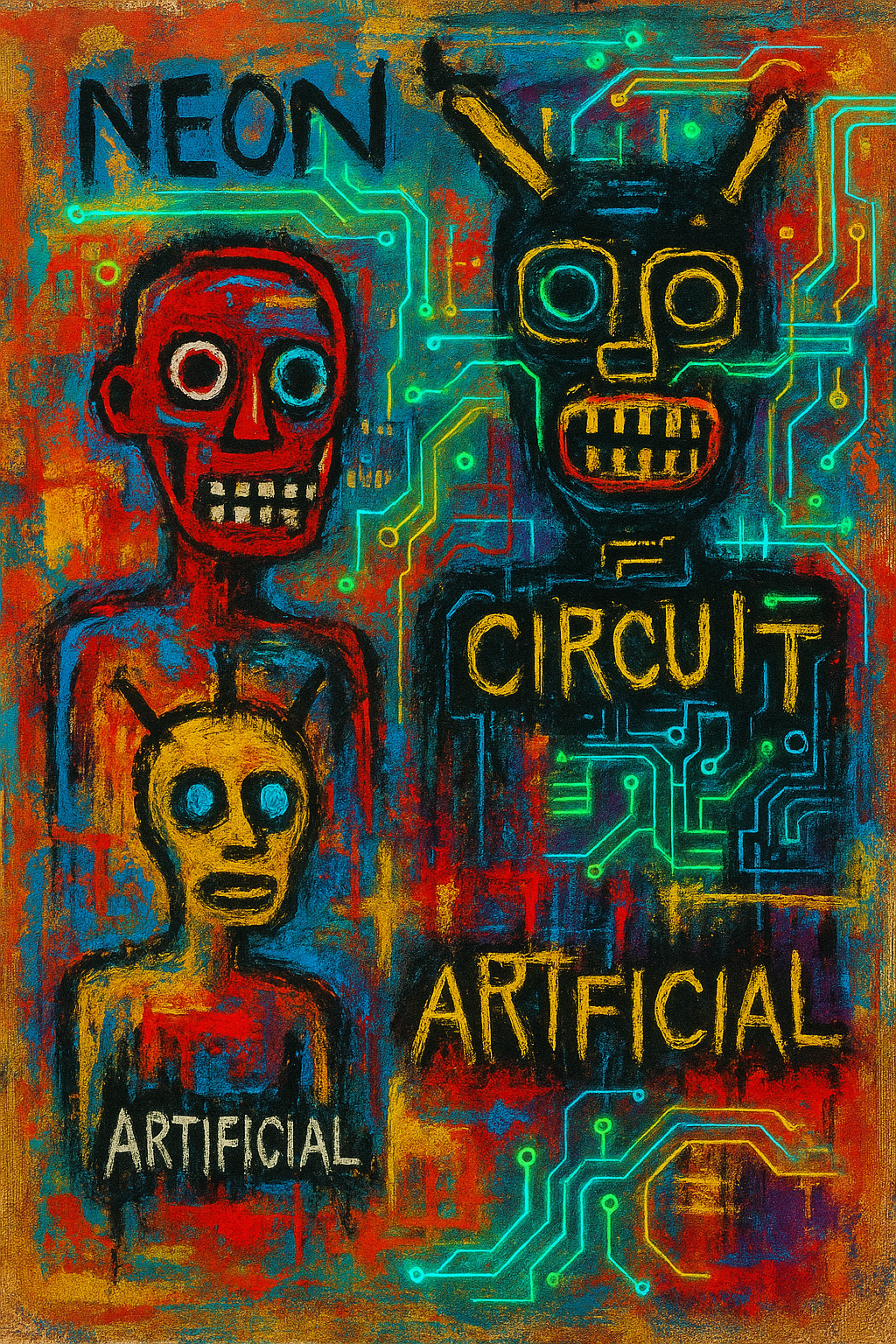
An AI-generated homage to Basquiat. Proof that you can paint over a masterpiece. But you probably shouldn’t.
And now there’s something new holding the brush: AI.
We’re entering an era where code writes code. Where vast neural nets generate entire applications, protocols, and systems with a few lines of human prompting. AI doesn’t just execute instructions — it invents them. It’s both the artist and the canvas. The coder and the code.
That changes everything. Because when code becomes self-replicating, self-evolving, the question of permanence grows even sharper. How do you preserve the purity of an original idea when an algorithm can spin out endless variations? How do you protect artistic intention when the art itself can mutate at machine speed?
AI promises optimization, scale, and power. But it also carries the same danger: the brush never stops moving. The masterpiece is never finished. And if everything can be endlessly tweaked, improved, or “reimagined,” at what point does the original meaning vanish entirely?
Bitcoin was punk because it stood still. Because it refused to bend to whims and updates. It planted its flag in the digital ground and dared the world to move around it. But we’re building a world where standing still might not even be possible anymore. Where velocity is virtue. Where every line of code whispers: “What’s next?”
And now, the brush paints itself — again and again — remixing, reinventing, overwriting. Until nobody remembers what the first stroke looked like, or who held the brush in the first place. Progress devours permanence. And the danger is that, one day, the original art — the raw, radical idea that started it all — gets buried beneath so many layers of updates that it’s gone. Lost under the noise of perpetual improvement.
In the rush toward innovation, we have to ask: is progress worth it if it erases the art?
The Bravest Creative Act
Somewhere above the Atlantic, I’m reminded that not everything should be changed. Some things deserve to stay exactly as they are. Like perfect code. Like memories. Like art.
At RIOT, we believe that some art, some code, and some ideas are sacred. Not everything needs an update. Sometimes the bravest creative act is to leave the masterpiece untouched.
Art isn’t meant to be optimized. It’s meant to be left the f*ck alone.